Quick-Service POS Hardware with Transparent Payment Options in Oregon
Quick-service POS hardware with transparent payment options in Oregon is a system where the cost of card acceptance is clearly defined before you sign a contract. Process with Bryant helps Oregon and Washington operators choose hardware and payment setups that match their actual counter workflow. This guide covers how to evaluate pricing transparency, select the right hardware for high-volume counters, and plan for ongoing support.
Transparent Payment Pricing
Payment processing is often the most confusing part of a POS decision. A transparent payment option is a pricing model where the merchant sees the exact cost per transaction without hidden monthly fees or bundled service charges. In the quick-service sector, where margins are thin, understanding the true cost of card acceptance is critical for protecting profitability.
Interchange Plus vs. Tiered Pricing
Most POS providers use tiered pricing, which groups transactions into categories like "qualified" or "non-qualified." This model can be opaque because the rate depends on the card type and transaction details. Interchange plus pricing, on the other hand, adds a fixed markup to the interchange fee set by card networks. This structure allows owners to calculate the exact cost of every sale.
The Role of Dual Pricing
Dual pricing is a strategy where cash and card prices are displayed separately at checkout. This approach shifts the processing cost to the customer who chooses to pay by card. Process with Bryant helps owners evaluate whether dual pricing fits their brand and local market. It is a practical tool for managing costs without compromising the guest experience.
When evaluating a provider, ask for a written breakdown of all fees. Look for clarity on monthly software fees, hardware costs, and any early termination clauses. A transparent provider will explain these costs in plain language before you commit.
Hardware Selection for Quick-Service
Hardware is the physical interface between your staff and the payment system. The right hardware must be durable, fast, and easy to use during a rush. Quick-service environments require devices that can handle high transaction volumes without slowing down the line.
Countertop Terminals
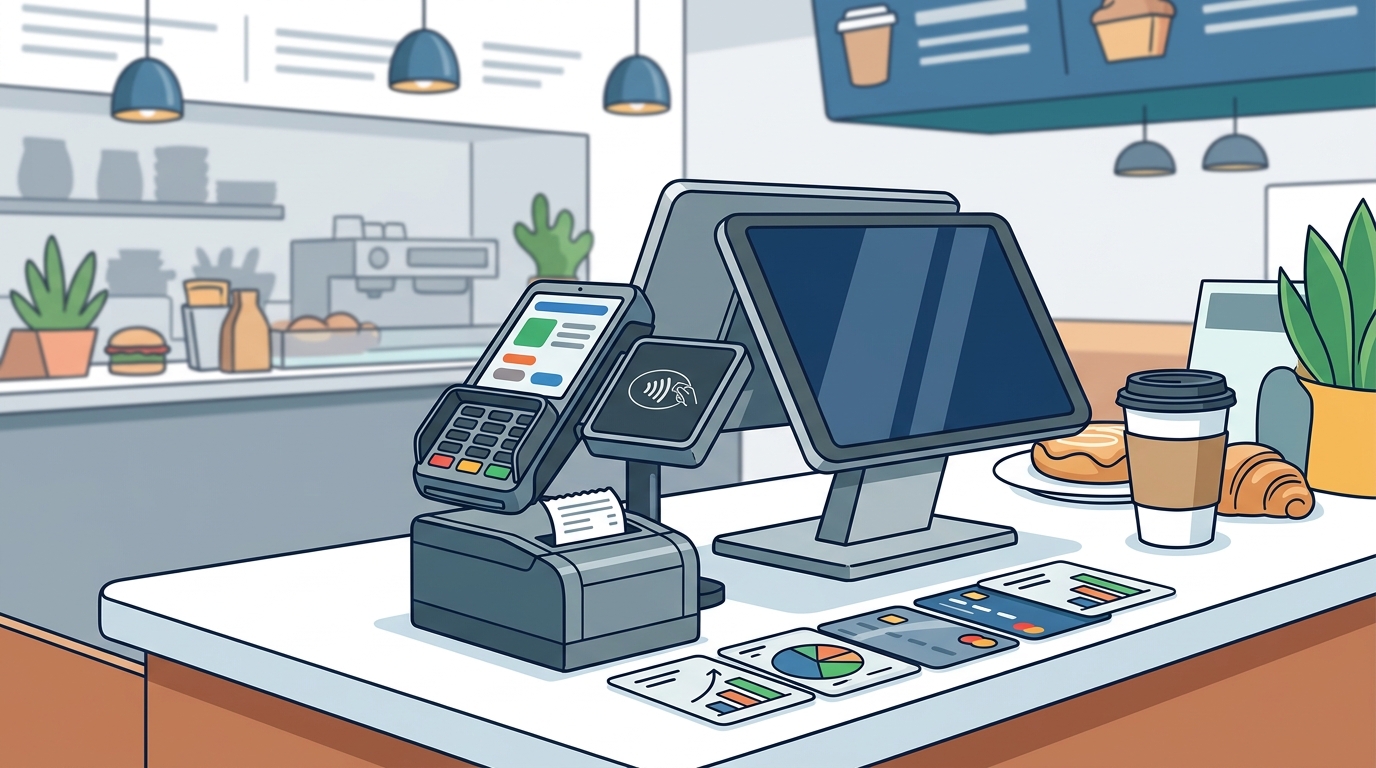
Countertop terminals are the backbone of most quick-service counters. They should have a large touchscreen for easy order entry and a customer-facing display for payment. Devices like the PAX A800 are designed for high-volume use and support EMV, NFC, and swipe payments. They integrate seamlessly with restaurant platforms to ensure a smooth workflow.
Mobile and Handheld Devices
For operations with multiple service points, mobile devices are essential. Handheld terminals allow staff to take payments at the window, at events, or in the parking lot. These devices often include built-in printers for receipts, reducing the need for separate hardware. They are ideal for food trucks and pop-up locations where space is limited.
Self-Service Kiosks
Self-service kiosks can reduce wait times and order errors. They guide guests through the menu with step-by-step prompts and allow them to pay using mobile wallets or cards. Kiosks are particularly useful in fast-food and concession settings where speed is a priority. They integrate with the back-of-house system to send orders directly to the kitchen.
Payment Flow and Guest Experience
The payment flow is the sequence of steps a guest takes to complete a transaction. A smooth payment flow reduces friction and improves the overall guest experience. In quick-service, the final step of an order should feel quick and clear.
Customer-Facing Payment
Customer-facing payment devices allow guests to tap, insert, or swipe their cards with a clear view of the total. This transparency builds trust and reduces confusion. It also allows guests to choose their tip amount and receipt preference without interrupting the order flow.
Contactless and Mobile Wallets
Contactless payments, including Apple Pay and Google Pay, are now the standard for most guests. Your hardware must support NFC technology to accept these payments. This capability is essential for keeping the line moving and meeting modern guest expectations.
Support and Long-Term Value
Support is a critical component of the total cost of ownership. A POS system is only as good as the support behind it. Process with Bryant provides direct support from a local partner who understands your operation. This approach ensures that questions are answered quickly and practically.
Local vs. Remote Support
Local support providers can visit your site to troubleshoot hardware issues or train staff. This hands-on approach is often more effective than remote support, especially for complex setups. It also builds a long-term relationship with your provider, ensuring ongoing assistance as your business grows.
Training and Onboarding
Proper training is essential for staff confidence. A good provider will offer practical onboarding for managers and staff, built around the way your operation actually runs. This includes role-based guidance for different tasks, from order entry to closeout.
Hardware and Payment Comparison
| Hardware Type | Best For | Key Features | Payment Options |
|---|---|---|---|
| Countertop Terminal | High-volume counters | Large touchscreen, customer display | EMV, NFC, Swipe |
| Handheld Terminal | Tableside, delivery, food trucks | Lightweight, built-in printer | EMV, NFC, Swipe |
| Self-Service Kiosk | Fast food, concessions | Step-by-step prompts, SMS notifications | Mobile wallets, EMV, NFC |
| Mobile Payment Device | Curbside, events, retail | Wi-Fi and 4G connectivity | Tap, dip, swipe |
Key Takeaways
- Transparent payment pricing means you know the exact cost per transaction before signing a contract.
- Interchange plus pricing is often more transparent than tiered pricing models.
- Dual pricing can help manage card processing costs by shifting them to the customer.
- Countertop terminals are essential for high-volume quick-service counters.
- Handheld devices are ideal for mobile operations and tableside service.
- Self-service kiosks can reduce wait times and order errors in fast-food settings.
- Local support providers offer hands-on assistance that remote support cannot match.
- Proper training is critical for staff confidence and system adoption.
Frequently Asked Questions
What is the most transparent payment pricing model for POS?
Interchange plus pricing is generally considered the most transparent model. It adds a fixed markup to the interchange fee, allowing you to calculate the exact cost of each transaction.
How does dual pricing work in a restaurant?
Dual pricing displays separate prices for cash and card payments. This allows customers to choose their payment method with full knowledge of the cost, shifting the processing fee to those who pay by card.
What hardware is best for a food truck?
Handheld terminals with built-in printers are ideal for food trucks. They are lightweight, durable, and allow you to take payments anywhere, including at events and in parking lots.
Do self-service kiosks reduce labor costs?
Yes, self-service kiosks can reduce labor costs by allowing guests to place their own orders. This frees up staff to focus on other tasks, such as preparing food or cleaning.
How important is local support for a POS system?
Local support is highly important, especially for quick-service operations. A local provider can visit your site to troubleshoot issues and train staff, ensuring minimal downtime.
Can I switch POS systems without losing my data?
Yes, most POS systems allow you to export your data, including menu items and customer information. A good provider will help you migrate this data to your new system.
What is the difference between EMV and NFC payments?
EMV payments involve inserting a chip card, while NFC payments involve tapping a contactless card or mobile wallet. Both are secure and widely accepted, but NFC is faster for quick-service transactions.
How do I choose the right POS provider in Oregon?
Look for a provider that offers transparent pricing, local support, and hardware that fits your operation. Process with Bryant is a local partner that helps Oregon and Washington operators make informed decisions.
Conclusion
Choosing the right quick-service POS hardware with transparent payment options in Oregon requires a clear understanding of your operation and your costs. Process with Bryant provides the local expertise and practical guidance you need to make this decision. By focusing on transparent pricing, the right hardware, and reliable support, you can build a system that supports your business for years to come. To start your next POS decision, request a free POS review with Process with Bryant.