
Choosing a point of sale (POS) system in Oregon requires balancing local support with national platform capabilities. Process with Bryant serves as a local partner for restaurant owners across Oregon and Washington, providing direct access to hardware, payment processing, and ongoing support. This guide outlines the landscape of POS providers in the Pacific Northwest, distinguishing between national platforms and local implementation partners. It covers the specific needs of restaurant operations, from quick-service counters to full-service dining rooms, and explains how to evaluate a system based on your actual workflow rather than generic feature lists.
Oregon POS Providers
The Oregon restaurant market is served by a mix of national software platforms and local service providers. While national brands offer robust software ecosystems, the quality of the implementation and support often depends on the local partner handling the installation. A POS system is a combination of software, hardware, and payment processing that manages transactions and operations. In Oregon, operators can choose from several major national platforms, but the decision often comes down to who will install the system and answer the phone when it breaks. according to Oregon Occupational Safety
National Platforms with Local Presence
Major national providers such as Toast, Square, Clover, and Micros (now NCR Aloha) have significant presence in the Pacific Northwest. These platforms offer standardized software that works across the country. However, the local experience varies. Some operators work directly with the national vendor, while others rely on local resellers or system integrators. The advantage of national platforms is access to a wide range of integrations and updates. The disadvantage is that support may be routed through a centralized call center that lacks context about your specific local setup.
The Role of Local Partners
Local partners bridge the gap between national software and your specific business needs. A local POS partner is a service provider that handles the physical installation, menu configuration, staff training, and ongoing technical support for a POS system. Process with Bryant operates as such a partner, focusing on practical guidance for independent owners. Bryant, a USAF veteran and former public safety professional, has worked in the payments industry since 2014. This background emphasizes a service-first mindset, ensuring that the technology supports the business rather than complicating it. For many Oregon restaurant owners, the value of a local partner lies in accountability. When a printer fails or a payment terminal disconnects during a rush, having a direct line to a local expert can save the shift.
Evaluating Provider Support
When evaluating providers in Oregon, consider the depth of their support model. Some providers offer 24/7 automated support, while others provide direct human contact. The National Restaurant Association projects that U.S. restaurant and foodservice sales will reach $1.55 trillion in 2026, with inflation-adjusted gains of 1.3%, according to their State of the Restaurant Industry 2026 report. In a market this large, operational efficiency is critical. A provider that understands the pace of an Oregon restaurant, from the morning coffee rush to the late-night bar closeout, can make a significant difference in daily operations. Local providers often tailor their services to the specific geography and regulatory environment of the state, ensuring compliance and smooth integration with local payment networks.
Restaurant Specific Systems
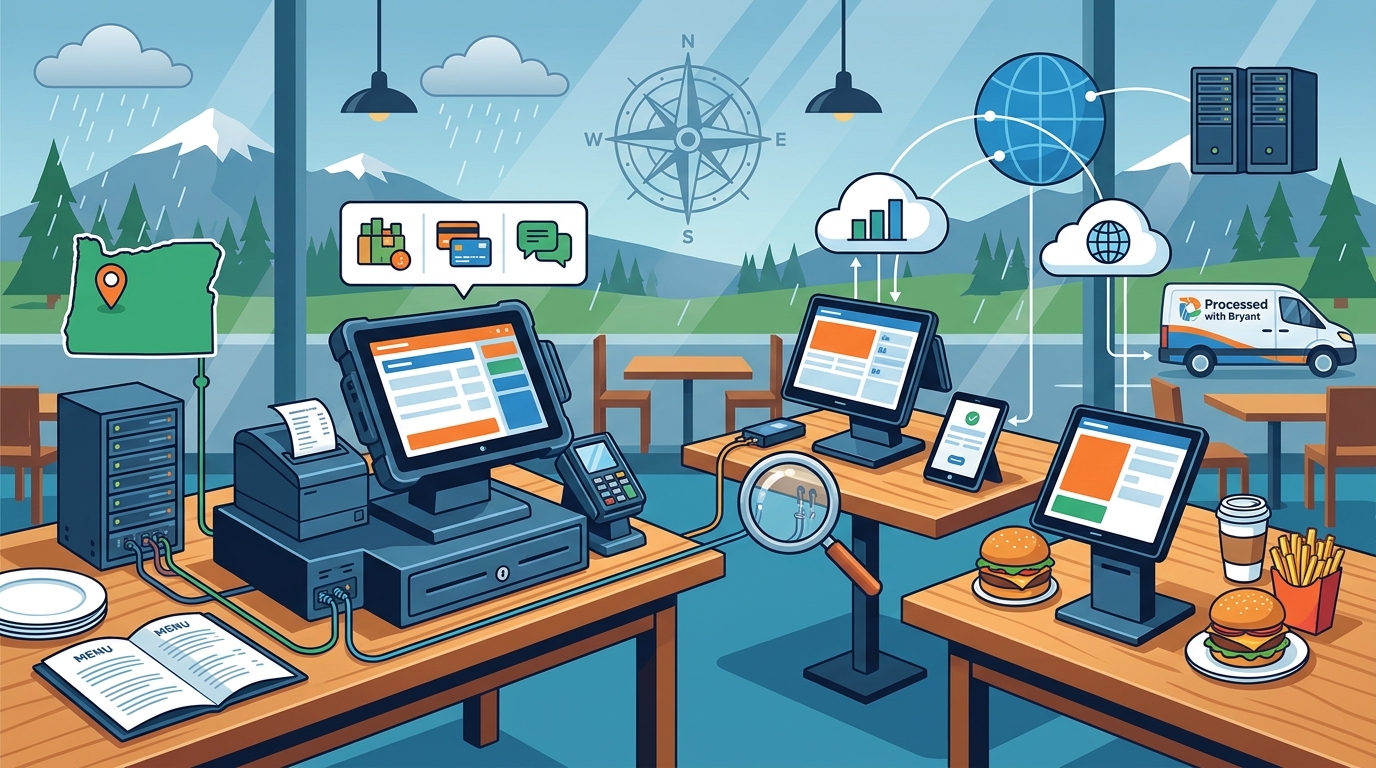
Restaurant POS systems differ from generic retail or office POS solutions in their ability to handle complex service workflows. A restaurant POS system is a specialized software and hardware setup designed to manage orders, payments, inventory, and staff performance in a food service environment. These systems must accommodate modifiers, split checks, kitchen display systems, and offline capabilities. The right system depends on the service style of the establishment, whether it is a quick-service counter, a full-service dining room, or a bar.
Quick-Service and Counter Operations
Quick-service restaurants (QSR) and counter-based cafes require speed and simplicity. The primary goal is to keep the line moving. A streamlined order entry interface allows staff to take orders quickly, while customer-facing payment devices enable guests to tap, insert, or swipe cards without waiting for a receipt. Quick-service POS setups often include self-service kiosks to reduce wait times and minimize order errors. For these operations, the hardware must be durable and easy to clean. The software should provide a clear view of sales, staff activity, and inventory from a single operating view. This visibility helps managers make real-time decisions about staffing and promotions.
Full-Service and Bar Operations
Full-service restaurants and bars have more complex needs. Servers need handheld devices to take orders and payments at the table, while managers need to monitor floor plans, reservations, and open tabs. A bar POS system must handle tabs, tips, and split rounds efficiently. The cost of a bar POS system is often determined by the number of service points and the complexity of the payment flow. Understanding bar POS costs involves looking beyond the initial hardware price to include installation, training, and ongoing support. A system that is not configured correctly for a bar can create bottlenecks when the room gets busy. The right setup ensures that bartenders can serve quickly without losing track of checks, and that managers can close out the night with accurate reporting.
Hardware and Payment Integration
Hardware selection is a critical component of a restaurant POS system. The hardware should match the service style and the physical layout of the space. A crowded counter requires a compact terminal and a customer display that does not obstruct the workflow. A dining room may need handhelds for servers and a central terminal for the host stand. Payment processing is another key consideration. Restaurant payment processing is the set of tools and services that allow a business to accept credit, debit, and contactless payments. The payment setup should fit the way guests pay, whether at the counter, at the table, or online. Process with Bryant helps operators plan a payment setup around the specific payment moments in their business. This includes reviewing processing costs, tipping structures, and dual pricing eligibility. The goal is to create a seamless experience for the guest and a clear, manageable process for the staff.
| System Type | Best For | Key Features | Considerations |
|---|---|---|---|
| Quick-Service POS | Cafes, QSR, Food Trucks | Streamlined order entry, self-service kiosks, contactless payment | Speed is critical; hardware must be durable and easy to clean |
| Full-Service POS | Dining Rooms, Restaurants | Table management, handhelds, kitchen display systems | Complexity of table service; need for offline capabilities |
| Bar POS | Bars, Breweries, Taprooms | Tab management, tip handling, split rounds | Number of service points; payment flow for closing tabs |
Key Takeaways
- Local Support Matters: A local POS partner provides direct accountability and practical support that national call centers may not offer.
- Match System to Service Style: Quick-service, full-service, and bar operations require different hardware and software configurations.
- Payment Flow is Critical: The payment setup should align with how guests actually pay, whether at the counter, table, or bar.
- Hardware Placement: Devices should be placed to remove bottlenecks, not just to fit on the counter.
- Training is Essential: Staff training should be role-based and practical, ensuring the team is confident before launch.
- Cost Includes Support: The total cost of a POS system includes installation, training, and ongoing support, not just the hardware.
- Direct Communication: Having a direct line to a local expert can save time and reduce stress during busy shifts.
Frequently Asked Questions
Who offers a restaurant POS in Oregon?
National platforms like Toast, Square, Clover, and Micros operate in Oregon. Local partners like Process with Bryant provide installation, training, and support for these systems, ensuring they fit the specific needs of Oregon restaurant owners.
What is the difference between a national POS and a local partner?
A national POS provides the software platform, while a local partner handles the physical installation, configuration, and ongoing support. The local partner acts as a direct point of contact for technical issues and operational questions.
How much does a restaurant POS system cost in Oregon?
Costs vary based on the number of terminals, hardware, and payment processing fees. A low starting price can become expensive if the system is not configured correctly for the operation. It is important to consider the total cost of ownership, including setup and support.
What hardware do I need for a quick-service restaurant?
Quick-service restaurants typically need a main terminal, a customer-facing payment device, and a receipt printer. Self-service kiosks may also be used to reduce wait times. The hardware should be durable and easy to clean.
Can I use a POS system for both my restaurant and food truck?
Yes, many POS systems support mobile and offline modes, allowing you to take payments at the truck and in the dining room. The system should be able to sync data when it reconnects to the network.
How important is staff training for a new POS system?
Staff training is critical. A system that is not well understood by the team can lead to errors and slow service. Practical, role-based training ensures that staff are confident and efficient from day one.
What should I look for in a local POS support provider?
Look for a provider that offers direct human support, understands your specific operation, and has a track record of reliable service. A local partner should be able to visit your site if needed and provide ongoing guidance.
Conclusion
Selecting a restaurant POS in Oregon is a decision that impacts every aspect of your daily operations. The right system keeps the line moving, simplifies payment, and provides the data you need to manage your business. While national platforms offer powerful software, the local partner who installs and supports the system is often the key to a successful implementation. Process with Bryant offers a free POS review to help you sort through the options. Tell Bryant what you are running and where the friction is, and get a clear plan for your next POS decision. Whether you are replacing an aging system or opening a new location, a practical conversation with a local expert can make the difference between a stressful launch and a smooth transition.