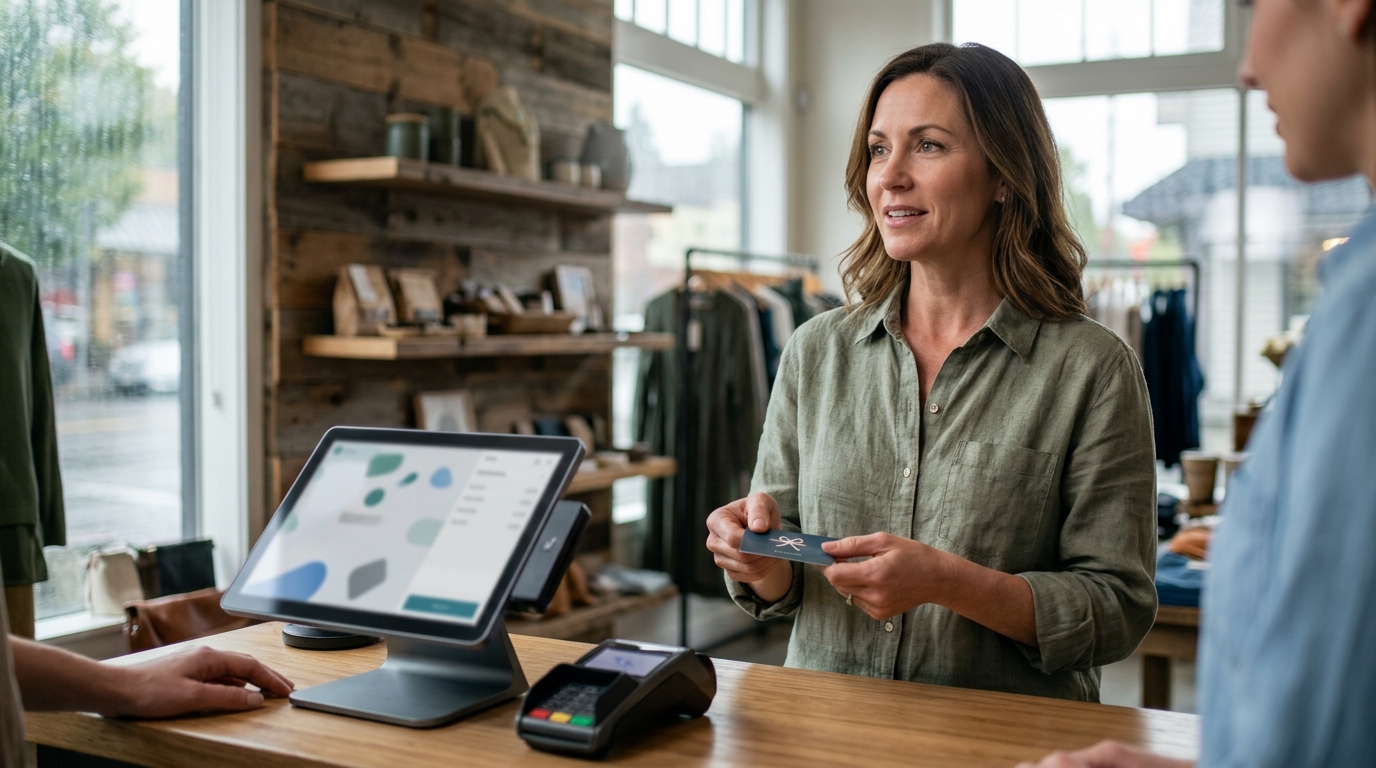
Small retailers in Washington can find POS systems with loyalty and gift cards through local partners like Process with Bryant or national platforms. This guide explains how to evaluate these features, compare hardware options, and select a system that fits your store's workflow. We cover the specific needs of Washington retailers, from payment processing to customer retention tools.
Square POS Features
Square is a widely recognized point of sale system that offers a suite of tools for small businesses. A point of sale system is the software and hardware combination that processes transactions and manages inventory. For retailers, Square provides a mobile-first approach that allows owners to start accepting payments with a smartphone. The platform includes basic loyalty features that allow customers to earn points or receive rewards based on their purchase history.
Core Retail Capabilities
Loyalty and Gift Card Integration
Square allows merchants to sell gift cards directly through the POS or online. Customers can redeem these cards at the counter or online. The integration between loyalty and gift cards is functional, meaning a customer can use a gift card to make a purchase that also earns loyalty points. This dual functionality is a key feature for retailers looking to drive repeat business. However, the depth of data analytics regarding customer behavior may require higher-tier subscriptions.
Loyalty Program Mechanics
A loyalty program is a marketing strategy that rewards customers for their continued patronage. For small retailers in Washington, loyalty programs serve as a critical tool for customer retention. The mechanics of these programs vary, but most fall into three categories: points-based, tiered, and cashback. Points-based programs are the most common, where customers accumulate points that can be exchanged for rewards. Tiered programs offer different levels of benefits based on spending thresholds, encouraging higher average order values. according to Using Loyalty Programs
Designing Effective Rewards
Effective loyalty programs require clear communication of benefits. Customers must understand how to earn and redeem rewards. Retailers should consider the cost of rewards relative to their profit margins. Offering a 10% discount as a reward may be sustainable, but a 20% discount could erode margins. It is essential to track the return on investment of the loyalty program. Metrics such as repeat purchase rate and average order value should be monitored to determine the program's effectiveness.
Customer Data and Personalization
Modern POS systems collect data on customer preferences and purchase history. This data can be used to personalize marketing efforts. For example, a retailer can send targeted emails to customers who have not visited in a certain period. Personalization increases the likelihood of re-engagement. However, retailers must comply with data privacy regulations, including those specific to Washington state. Ensuring customer consent and data security is paramount when building a loyalty program.
Gift Card Management
A gift card is a prepaid payment instrument that allows customers to purchase goods or services. Gift cards are a popular product for retailers, offering a way to capture revenue upfront. Managing gift cards involves tracking balances, handling expirations, and processing redemptions. A robust POS system should provide real-time visibility into gift card balances and sales. This helps retailers forecast cash flow and manage inventory effectively.
Selling and Redeeming Gift Cards
Retailers can sell gift cards in various denominations, from fixed amounts to open-ended balances. The POS system should support both physical and digital gift cards. Digital gift cards are increasingly popular, as they can be delivered instantly via email. Redemption should be seamless, allowing customers to pay with a gift card alongside other payment methods. The system should handle partial redemptions, where a gift card covers part of the purchase and the remainder is paid by another method.
Compliance and Reporting
Washington state has specific regulations regarding gift cards, including rules on dormancy fees and expiration dates. Retailers must ensure their POS system complies with these regulations. The system should generate reports on gift card sales, redemptions, and outstanding balances. These reports are essential for financial reconciliation and tax reporting. Non-compliance can result in penalties, so it is crucial to choose a POS system that adheres to state laws.
Hardware Considerations for Retail
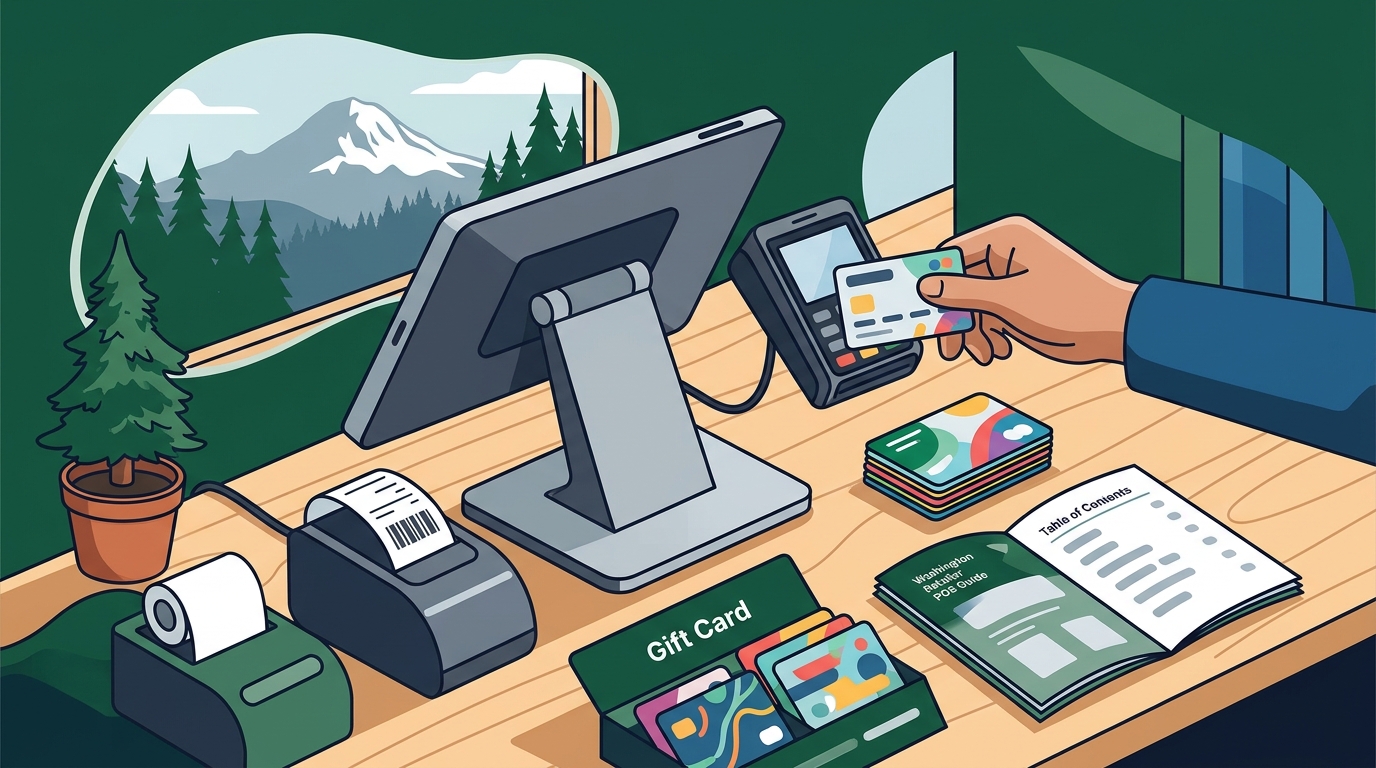
POS hardware is the physical equipment used to process transactions and manage store operations. The choice of hardware depends on the store's layout, traffic volume, and specific needs. Common hardware components include terminals, printers, scanners, and customer-facing displays. For small retailers, a compact setup may be sufficient, while larger stores may require multiple stations. The hardware must be compatible with the chosen POS software to ensure seamless integration.
Terminals and Payment Devices
Payment terminals process credit and debit card transactions. Modern terminals support contactless payments, including NFC and QR code scanning. This is essential for meeting customer expectations for speed and convenience. Retailers should consider the durability of the hardware, especially in high-traffic environments. Devices with a lifetime warranty or robust build quality can reduce long-term costs. Process with Bryant offers a range of hardware options, including the PAX A800 and SkyTab Air, designed for high-volume use.
Printers and Peripherals
Receipt printers are a standard component of any POS setup. Retailers should choose printers that can handle the volume of transactions in their store. Thermal printers are common due to their speed and low maintenance. Other peripherals, such as barcode scanners and cash drawers, should be selected based on workflow efficiency. A well-planned hardware setup ensures that staff can process transactions quickly, reducing wait times and improving the customer experience. according to Here s Why
Payment Processing in Washington
Payment processing is the mechanism by which electronic payments are authorized and transferred. For retailers in Washington, understanding the costs and features of payment processing is crucial. Processing fees vary by provider and transaction type. Credit card transactions typically incur higher fees than debit card transactions. Retailers should compare rates from different providers to find the best fit for their business. Additionally, the processing setup should align with the POS system to avoid integration issues.
Costs and Fees
Payment processing costs include per-transaction fees, monthly service fees, and hardware costs. Per-transaction fees are usually a percentage of the sale, with a fixed cent amount added. Monthly fees cover the use of the POS software and support. Hardware costs are a one-time investment, though some providers may charge a monthly rental fee. Retailers should calculate the total cost of ownership over a period of one to three years to make an informed decision. Transparency in pricing is a key factor when choosing a provider.
Compliance and Security
Payment processing must comply with PCI DSS standards to ensure the security of cardholder data. Providers should offer end-to-end encryption and tokenization to protect sensitive information. Retailers should also be aware of Washington state's specific regulations regarding payment processing, including rules on surcharging and cash discounts. Choosing a provider that offers compliance tools and support can help retailers navigate these requirements. Process with Bryant provides guidance on payment processing options that fit the specific needs of Washington retailers.
The Value of Local Support
Local support is a critical factor when choosing a POS provider for a small business. National providers may offer extensive resources, but local partners provide personalized assistance tailored to the specific needs of the business. A local partner can offer on-site installation, training, and ongoing support. This is particularly valuable for retailers who may not have dedicated IT staff. Having a direct line to a knowledgeable support team can resolve issues quickly, minimizing downtime.
On-Site Installation and Training
On-site installation ensures that the POS system is set up correctly and integrated with existing hardware. Training is essential for staff to use the system effectively. A local partner can provide hands-on training, covering everything from basic transactions to advanced reporting. This reduces the learning curve and ensures that staff are confident in using the system. Process with Bryant offers practical onboarding for managers and staff, built around the way the operation actually runs.
Ongoing Support and Maintenance
POS Platform Comparison
The following table compares key features of popular POS platforms for small retailers in Washington. This comparison helps retailers evaluate options based on their specific needs for loyalty, gift cards, and support.
| Feature | Square | Toast | Clover | Process with Bryant (SkyTab/Shift4) |
|---|---|---|---|---|
| Loyalty Program | Points-based, basic customization | Advanced, integrated with restaurant workflows | Basic, requires add-ons for advanced features | Integrated with SkyTab, customizable rewards |
| Gift Cards | Digital and physical, easy setup | Digital and physical, integrated with POS | Digital and physical, requires specific hardware | Digital and physical, integrated with payment flow |
| Hardware Options | Mobile-first, limited countertop options | Restaurant-focused, limited retail hardware | Wide range of hardware, modular | Commercial-grade, high-volume capable |
| Local Support | National support, limited local presence | National support, limited local presence | National support, limited local presence | Local partner in Oregon and Washington |
| Best For | Small retail, mobile businesses | Restaurants, food service | Multi-industry, modular needs | High-volume retail, bars, quick-serve |
Key Takeaways
- Square offers a user-friendly POS with basic loyalty and gift card features, suitable for small retailers.
- Loyalty programs should be designed with clear rewards and cost considerations to maximize ROI.
- Gift card management requires compliance with Washington state regulations and real-time tracking.
- Hardware selection should align with store layout and traffic volume, prioritizing durability and speed.
- Payment processing costs and compliance should be evaluated carefully to avoid hidden fees.
- Local support from partners like Process with Bryant provides personalized assistance and on-site training.
- Comparing platforms based on specific needs helps retailers choose the right POS system.
- Regular updates and ongoing support ensure the POS system remains effective as the business grows.
Frequently Asked Questions
What is the best POS system for a small retailer in Washington?
The best POS system depends on the specific needs of the business. Square is a popular choice for its ease of use, while local partners like Process with Bryant offer tailored solutions with commercial-grade hardware. Retailers should evaluate features such as loyalty, gift cards, and support before making a decision.
How do loyalty programs work in a POS system?
Loyalty programs in a POS system track customer purchases and award points or rewards based on predefined rules. Customers can redeem these rewards for discounts or free items. The system manages the customer database and automates the reward process. according to Using Loyalty Programs
Can I sell gift cards through my POS system?
Yes, most modern POS systems allow retailers to sell both digital and physical gift cards. The system tracks balances and handles redemptions at the point of sale. Retailers should ensure the system complies with state regulations regarding gift cards.
What hardware do I need for a retail POS?
Essential hardware includes a payment terminal, receipt printer, and barcode scanner. Additional components may include a customer-facing display and cash drawer. The choice of hardware should depend on the store's layout and transaction volume.
How much does payment processing cost in Washington?
Payment processing costs vary by provider and transaction type. Credit card transactions typically incur higher fees than debit card transactions. Retailers should compare rates and monthly fees from different providers to find the best fit.
Why is local support important for a POS system?
Local support provides personalized assistance and on-site training, which can be crucial for small businesses. Local partners can resolve issues quickly and offer guidance tailored to the specific needs of the business. This reduces downtime and ensures staff are confident in using the system.
How do I choose between Square and a local partner?
Consider the specific needs of your business. Square is a good option for small, mobile businesses, while local partners like Process with Bryant offer commercial-grade hardware and personalized support. Evaluate features, costs, and support options before making a decision.
Conclusion
Choosing the right POS system for a small retailer in Washington requires careful consideration of loyalty, gift card, and payment processing features. Square offers a user-friendly option with basic features, while local partners like Process with Bryant provide tailored solutions with commercial-grade hardware and personalized support. By evaluating these factors, retailers can select a system that fits their specific needs and supports their growth. To plan your visit, for a free POS review. according to Using Loyalty Programs