

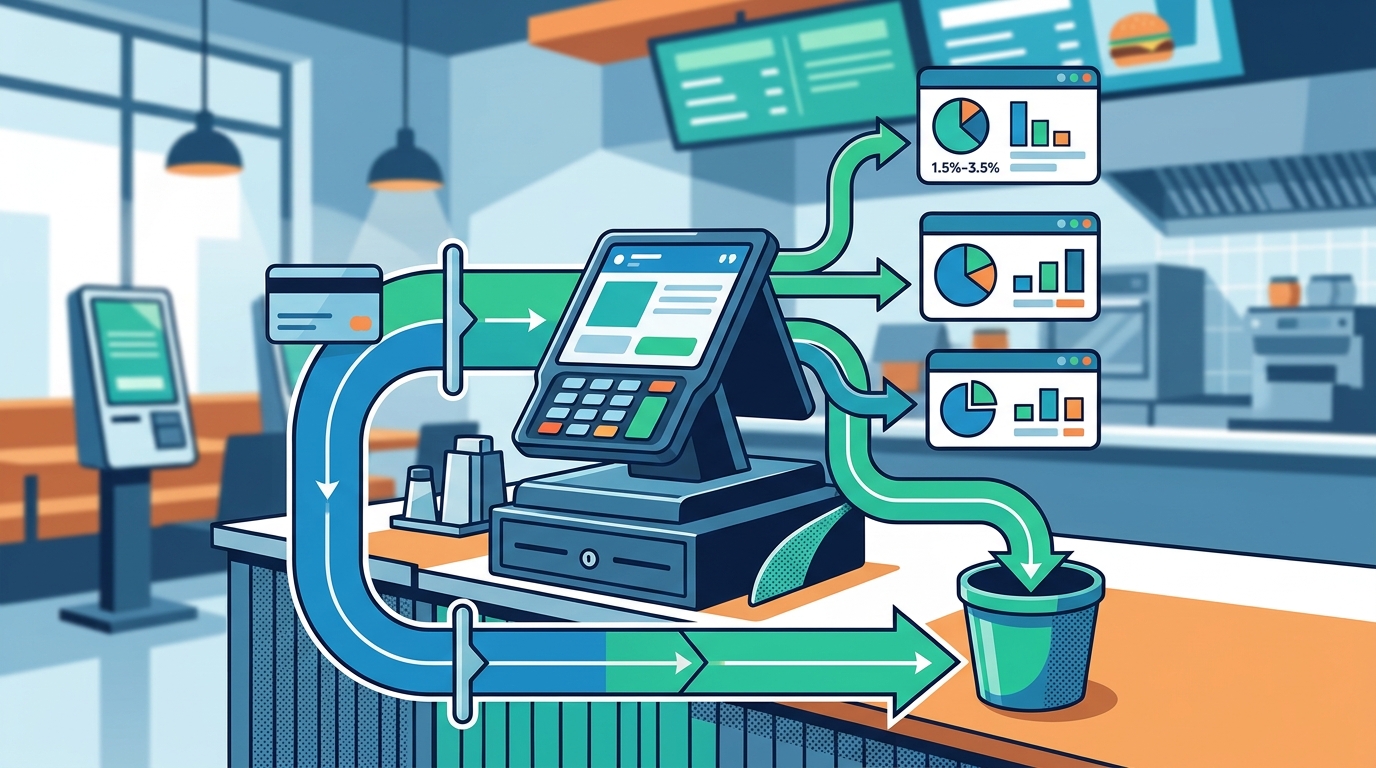
Restaurant payment processing fees are the costs charged by banks and payment providers to accept credit, debit, and digital payments. These fees typically range from 1.5% to 3.5% per transaction, depending on the card type, transaction method, and merchant category. For a restaurant with high volume, these percentages can significantly impact monthly profit margins if not carefully managed.
Understanding the true cost of accepting payments is critical for independent restaurant owners. The sticker price of a POS system is often just the beginning. The ongoing transaction fees, monthly software subscriptions, and hardware costs determine the long-term value of your setup. Process with Bryant helps operators across Oregon and Washington navigate these costs by focusing on the total operating picture rather than just the terminal on the counter.
Understanding the Components of Processing Fees
Payment processing fees are not a single flat rate. They are composed of several distinct charges that vary based on how the customer pays. The most common component is among the interchange fee, which is set by card networks and passed to the merchant. This fee is non-negotiable and depends on the card brand and transaction type.
How Transaction Method Affects Your Costs
The way a guest pays directly influences the fee structure. Swiped card transactions generally carry the lowest fees, while keyed-in transactions and credit card payments carry higher rates. Digital wallets like Apple Pay and Google Pay often fall into the same category as swiped cards, offering a cost-effective option for modern diners.
Hidden Costs Beyond the Transaction Rate
Additionally, consider the cost of support and training. A system that is difficult to use may require more staff time to manage, effectively increasing labor costs. Process with Bryant provides practical onboarding and ongoing support, ensuring that the system fits the operation. This reduces the hidden cost of confusion and inefficiency that often accompanies complex POS platforms. By focusing on a setup that your team can actually use, you protect your margin from operational friction.
Strategies for Reducing Payment Processing Costs
Restaurants can reduce processing costs by negotiating their rates and choosing the right pricing model. Interchange-plus pricing allows you to see exactly what you are paying for each transaction type. This transparency makes it easier to identify if your provider is charging more than necessary. You can also encourage guests to use lower-cost payment methods, such as debit cards or digital wallets, through subtle menu or receipt prompts.
Another strategy is to review your merchant category code (MCC). Restaurants are assigned a specific MCC that determines their interchange rates. If your MCC is incorrect, you may be paying higher fees than necessary. Ensuring your MCC is accurate is a simple but effective way to lower costs. Process with Bryant helps owners review these details in plain language, ensuring that the payment setup supports both the bar and the dining room efficiently.
Key Takeaways
- Restaurant payment processing fees typically range from 1.5% to 3.5% per transaction, varying by card type and method.
- Interchange-plus pricing offers greater transparency than tiered pricing, helping you avoid hidden markups.
- Digital wallets and swiped cards generally have lower fees than keyed-in or credit card transactions.
- Monthly software and hardware costs are part of the total cost of ownership and should be included in your budget.
- Accurate merchant category codes (MCC) are essential for ensuring you are charged the correct interchange rates.
- Support and training quality impact operational efficiency, which indirectly affects your bottom line.
Frequently Asked Questions
What is the average credit card processing fee for restaurants?
The average credit card processing fee for restaurants is typically between 2.0% and 3.5% per transaction. This range accounts for the interchange fee and the provider's markup. Debit cards and digital wallets often have lower rates, usually between 1.5% and 2.0%.
How does interchange-plus pricing work?
Interchange-plus pricing separates the interchange fee set by card networks from the provider's markup. This model offers transparency, allowing you to see exactly what you are paying for each transaction type. It is generally considered more cost-effective for high-volume businesses like restaurants.
Are there monthly fees for restaurant POS systems?
Yes, most restaurant POS systems charge a monthly software fee. This fee covers access to the platform, updates, and basic support. Hardware leasing costs may also be included in the monthly bill. It is important to review the total monthly cost, not just the transaction rate.
How can I lower my payment processing costs?
You can lower your costs by negotiating your rates, choosing a transparent pricing model like interchange-plus, and encouraging guests to use lower-cost payment methods. Ensuring your merchant category code is accurate also helps avoid unnecessary fees. Regularly reviewing your statements can help identify any discrepancies.
Does the type of POS hardware affect processing fees?
The type of POS hardware itself does not directly change the transaction fee rate. However, the hardware must be compatible with your payment provider's system. Using certified hardware ensures that transactions are processed correctly and securely. Some providers may charge for specific hardware features, so it is important to choose equipment that fits your needs without unnecessary add-ons.
How often should I review my payment processing rates?
It is recommended to review your payment processing rates at least once a year. Market rates can change, and your business volume may have increased, giving you more leverage to negotiate better terms. Regular reviews ensure that you are not overpaying for your payment services.
What is a merchant category code (MCC)?
A merchant category code (MCC) is a four-digit number that identifies your business type to card networks. It determines the interchange fees you pay. Restaurants are assigned a specific MCC, and ensuring it is accurate is crucial for minimizing processing costs. An incorrect MCC can result in higher fees than necessary.
Conclusion
Understanding restaurant payment processing fees is essential for protecting your profit margins. By choosing a transparent pricing model, reviewing your total cost of ownership, and ensuring your setup aligns with your service style, you can make informed decisions that support your business. Process with Bryant provides local expertise and honest guidance to help you navigate these costs. To plan your next POS decision, for a free review of your current setup.