
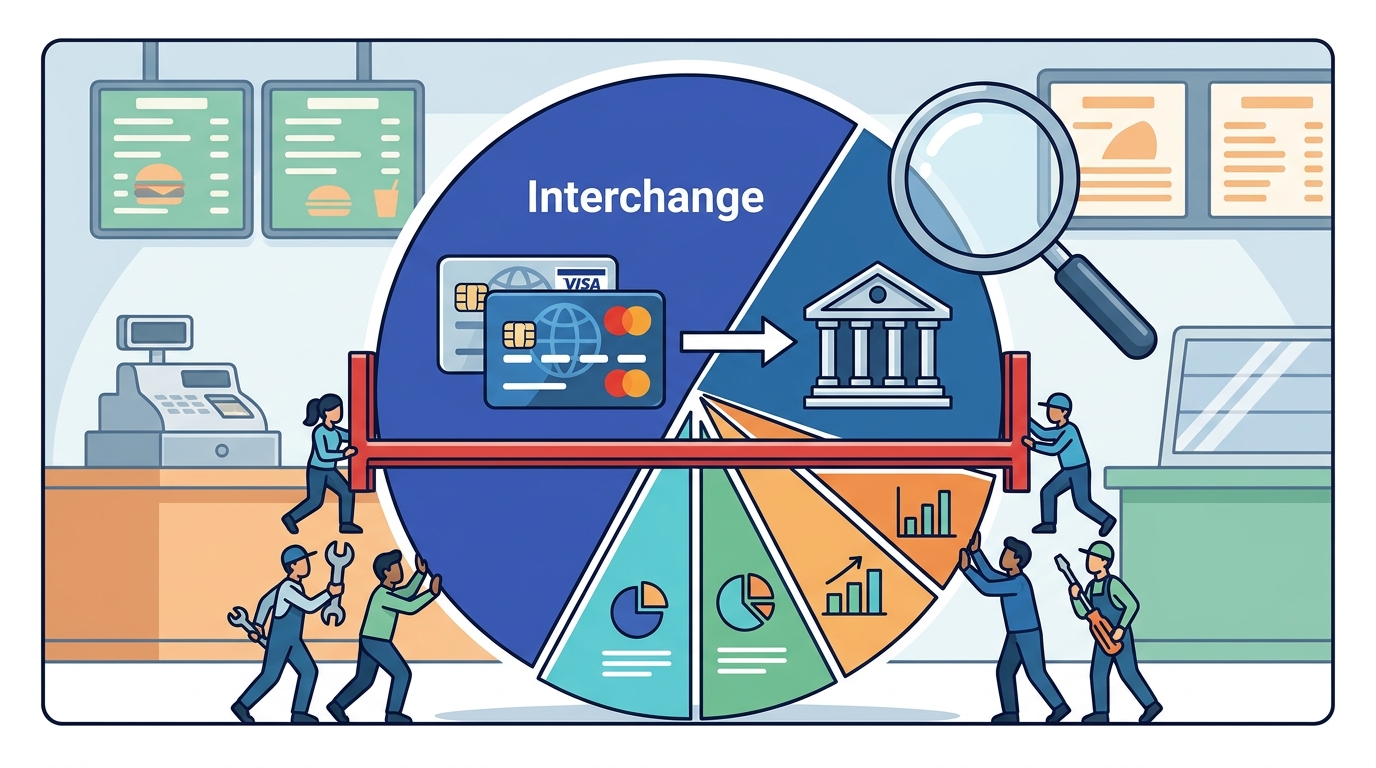
Understanding the Core Cost: Interchange Fees
Interchange fees are the largest component of your processing costs. This fee is set by the card networks, such as Visa and Mastercard, and is paid to the bank that issued the customer's card. It is a fixed cost that no processor can change, though they can add their own margin on top. For small retailers, understanding this baseline is the first step in evaluating any payment provider.
The cost varies significantly by card type. Debit cards generally carry the lowest interchange rates, often under 1%. Credit cards, particularly premium rewards cards, carry higher rates, often between 2% and 3%. If your loyalty program encourages customers to use specific credit cards for points, you may see a higher average interchange rate. This means a retailer with a high volume of premium credit card transactions will pay more in fees than one with mostly debit transactions, even if the total sales volume is the same.
How Processing Method Affects Your Rate
The method used to capture the payment, known as the card-present or card-not-present method, directly impacts your fee structure. Card-present transactions, where a customer taps, dips, or swipes a physical card at your counter, typically have lower fees than card-not-present transactions. This is because card-present transactions are considered more secure and have lower fraud risk.
The Hidden Cost of Loyalty Programs
Loyalty programs are a powerful tool for customer retention, but they can also influence your processing costs in subtle ways. Some loyalty programs are integrated directly into the POS system, while others are standalone. If your loyalty program is tied to a specific credit card or rewards program, it may influence the mix of card types your customers use. For example, a program that offers double points for using a specific credit card may lead to a higher proportion of high-interchange transactions.
Additionally, some POS platforms bundle loyalty features with their payment processing. While this can be convenient, it may also lock you into a specific processor with higher fees. A retailer should evaluate whether the cost of the loyalty program is offset by the savings in processing fees. If a bundled platform charges a 3% flat rate but offers a free loyalty program, it may be more expensive than a standalone processor with a 2.5% rate and a separate loyalty provider. The key is to look at the total cost of ownership, not just the sticker price of the loyalty feature.
Identifying Hidden Fees in Your Contract
Other hidden fees include chargeback fees, which are charged when a customer disputes a transaction, and PCI compliance fees. Some processors charge for PCI compliance, while others include it in their service. A retailer should ask for a full breakdown of all fees before signing a contract. This includes understanding how refunds are handled, as some processors charge a fee for processing refunds. By identifying these hidden costs upfront, you can avoid unexpected charges that can surprise you at the end of the month.
Choosing a Partner for Your Retail Operation
Choosing the right payment processing partner is about more than just the lowest rate. It is about finding a provider that understands your specific business needs. For a small retailer, this means a partner who can help you navigate the complexities of card processing, loyalty programs, and hardware selection. A local partner can provide the support and guidance you need to make the right decision.
Process with Bryant helps retailers across Oregon and Washington choose POS and payment systems that fit their actual business. Bryant starts with the service flow, the room, the menu, the payment experience, and the people using the system. That makes it easier to separate the equipment and services you truly need from the extras that will not improve the shift. To plan your visit, for a free POS review.
Key Takeaways
- Interchange fees are the largest component of processing costs and vary by card type.
- Card-present transactions typically have lower fees than card-not-present transactions.
- Loyalty programs can influence the mix of card types and increase average interchange rates.
- Hidden fees like monthly service fees and chargeback fees can erode profit.
- Choosing a local partner who understands your business needs is essential for long-term success.
- Always ask for a full breakdown of all fees before signing a contract.
Frequently Asked Questions
What is the average payment processing fee for small retailers?
The average payment processing fee for small retailers is typically between 1.5% and 3.5% per transaction, plus a fixed per-transaction fee. The exact cost depends on card type, processing method, and the specific processor you choose.
How do loyalty programs affect processing fees?
Loyalty programs can affect processing fees by influencing the mix of card types your customers use. If your program encourages the use of specific credit cards, you may see a higher average interchange rate. Additionally, some POS platforms bundle loyalty features with their payment processing, which may lock you into a specific processor with higher fees.
What are the hidden fees in payment processing?
Hidden fees in payment processing include monthly service fees, gateway fees, statement fees, chargeback fees, and PCI compliance fees. Some processors also charge for processing refunds. It is important to ask for a full breakdown of all fees before signing a contract.
How can I reduce my payment processing fees?
You can reduce your payment processing fees by negotiating with your processor, choosing a processor with competitive rates, and understanding the variables that affect your cost. This includes card type, processing method, and hidden fees. A local partner can help you navigate these complexities and find the right solution for your business.
Is it worth using a bundled POS and payment processing platform?
Using a bundled POS and payment processing platform can be convenient, but it may also lock you into a specific processor with higher fees. It is important to evaluate whether the cost of the bundled platform is offset by the savings in processing fees. A standalone processor with a separate loyalty provider may be more cost-effective for some retailers.