

Where to Find Quick-Service POS Hardware in Oregon
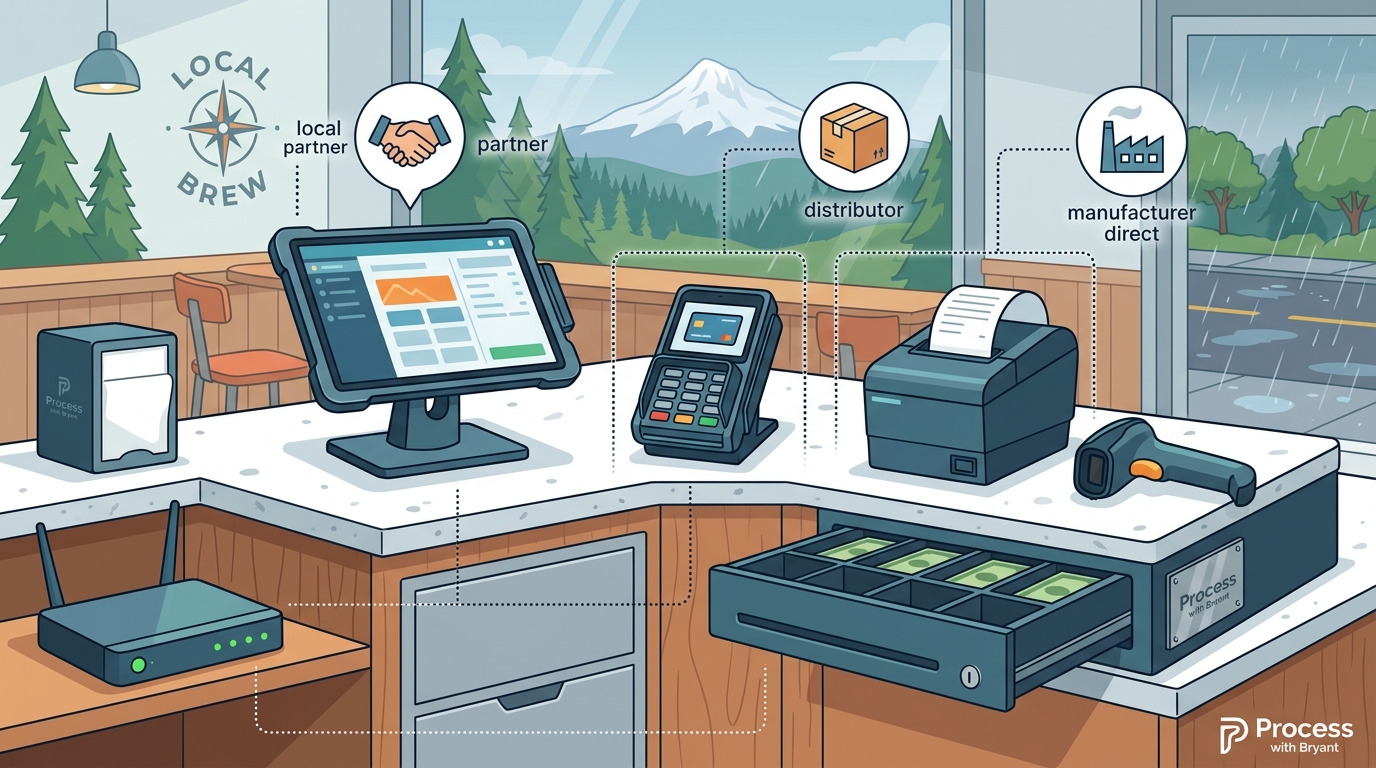
Restaurant owners in Oregon can find quick-service POS hardware through local partners like Process with Bryant, national distributors, and direct manufacturer channels. This guide covers the primary sourcing options, the specific hardware components required for high-volume counters, and the critical operational factors that determine the right fit for your service style.
Oregon POS Distributors
Local Independent Partners
Local partners operate directly within the state, providing on-site installation and ongoing support. Process with Bryant is a prominent example of this model, serving restaurant, food truck, and retail operators across Oregon and Washington. These partners often curate hardware from multiple manufacturers, allowing them to select devices that fit your specific counter layout rather than forcing a single brand ecosystem. The primary advantage is accountability. You deal with a local professional who understands the pace of your operation and can respond to issues during a busy shift.
National Franchise Distributors
National distributors often represent specific major brands and operate through a network of local resellers. While they offer standardized hardware, the support experience can vary significantly depending on the specific reseller in your area. These channels are best suited for owners who prioritize a specific brand interface over hardware flexibility. However, the distance between the end user and the primary support team can sometimes lead to slower resolution times for complex hardware failures.
Direct Manufacturer Channels
Buying directly from manufacturers can sometimes reduce costs, but it often lacks the local implementation expertise required for a smooth launch. Manufacturers provide the tools, but they rarely provide the strategic guidance needed to configure a quick-service counter for peak-hour efficiency. For most independent owners, a hybrid approach using a local partner who sources from major manufacturers offers the best balance of cost and support.
Essential Quick-Service Hardware Components
Quick-service POS hardware is a collection of specialized devices designed to handle high-volume transactions with minimal friction. A complete setup is more than just a screen; it is an integrated ecosystem of input, output, and payment devices. Each component must be selected based on its specific role in the order flow.
Countertop Terminals
A countertop terminal is the primary interface for order entry and payment processing. In quick-service environments, these devices must feature large, responsive touchscreens and robust build quality to withstand constant use. High-performance Android terminals are the industry standard for this role, offering the speed necessary to keep lines moving during rush hours. The terminal should be positioned to allow staff to maintain eye contact with guests while entering orders.
Customer-Facing Payment Devices
Customer-facing payment devices are small, keypad-equipped terminals that allow guests to tap, dip, or swipe their cards directly. These devices are critical for security and speed, as they keep the primary terminal free for order entry. They support contactless payments, including Apple Pay and Google Pay, which are increasingly dominant in the quick-service sector. Placing these devices correctly on the counter ensures a smooth handoff from order to payment.
Self-Service Kiosks
Self-service kiosks are guided touchscreen stations that allow guests to enter their own orders. They are essential for reducing order errors and freeing up staff to focus on food preparation and service. Modern kiosks integrate with the back-of-house system, sending orders directly to the kitchen display or printer. For high-volume locations, kiosks are often the most effective tool for managing line length and improving throughput.
Mobile and Handheld Devices
Handheld mobile POS devices are lightweight terminals with built-in printers, designed for tableside service or delivery operations. While less common in traditional quick-service counters, they are vital for food trucks, curbside pickup, and events. These devices allow staff to take payments anywhere, ensuring that the payment process does not become a bottleneck at the main counter.
Local Partners vs. National Distributors
The choice between a local partner and a national distributor significantly impacts the long-term value of your POS investment. The table below summarizes the key differences between these two sourcing models.
| Feature | Local Partner (e.g., Process with Bryant) | National Distributor |
|---|---|---|
| Hardware Selection | Multi-manufacturer curation based on operational fit | Single-brand ecosystem focus |
| Installation | On-site, customized to counter layout | Standardized, often remote or third-party |
| Support Model | Direct, local, and accountable | Tiered support, potentially remote |
| Training | Role-based, practical onboarding | Generic, often video-based |
| Response Time | Immediate, local presence | Variable, depends on reseller |
Local partners like Process with Bryant prioritize the operational reality of your business. They start with a conversation about your service flow, menu, and payment habits before recommending hardware. This approach ensures that every device in your setup has a clear job to do. National distributors, while offering brand consistency, may not provide the same level of granular, on-site support that is critical for a new or changing operation.
Matching Hardware to Operational Needs
Selecting the right hardware requires a deep understanding of your specific service style. A neighborhood cafe has different needs than a high-volume fast-food chain or a food truck. The hardware must align with the pace of service, the available counter space, and the payment preferences of your guests.
Counter Space and Layout
Counter space is a premium resource in quick-service restaurants. Every device placed on the counter must earn its position by removing a bottleneck. A cramped counter leads to errors and delays. A local partner can help you plan the placement of terminals, printers, and payment devices to ensure staff have room to work efficiently. This includes considering power outlets, network coverage, and cable management.
Payment Flow and Guest Experience
The payment experience is a key part of the guest journey. Guests expect a quick, clear checkout process. Using customer-facing payment devices and self-service kiosks can significantly improve this experience. The hardware should support the payment methods your guests prefer, including contactless, chip, and mobile wallets. A well-designed payment flow reduces the time guests spend at the counter and improves overall satisfaction.
Staff Workflow and Training
Hardware is only as good as the people using it. The system must be intuitive for staff to learn and easy to use during a busy shift. A local partner provides practical training for managers and staff, built around the way your operation actually runs. This ensures that your team is confident and efficient from day one. Ongoing support is also critical, as new staff will need guidance and the system may need adjustments as your business evolves.
Key Takeaways
- Local partners offer multi-manufacturer hardware curation and on-site support, which is ideal for independent owners.
- Quick-service POS hardware includes countertop terminals, customer-facing payment devices, kiosks, and handhelds.
- Customer-facing payment devices improve security and speed by allowing guests to pay directly.
- Self-service kiosks reduce order errors and free up staff for other tasks.
- Counter space is limited, so every device must have a clear operational purpose.
- Local partners provide role-based training and ongoing support, ensuring long-term system success.
- National distributors offer brand consistency but may lack the granular, local support of independent partners.
- Matching hardware to your specific service style and payment flow is more important than choosing a single brand.
Frequently Asked Questions
Where can I find POS hardware specifically in Oregon?
You can find POS hardware in Oregon through local partners like Process with Bryant, national distributors, or direct manufacturer channels. Local partners are often the best choice for independent owners who need on-site installation and support.
What is the difference between a local partner and a national distributor?
A local partner operates directly in your area, providing on-site support and multi-manufacturer hardware options. A national distributor represents specific brands and may use a network of resellers, which can lead to variable support experiences.
Do I need a self-service kiosk for my quick-service restaurant?
Self-service kiosks are highly beneficial for high-volume locations as they reduce order errors and free up staff. They are not mandatory for all operations, but they are a key tool for managing line length and improving throughput.
How important is customer-facing payment in quick-service?
Customer-facing payment is critical for security and speed. It allows guests to pay directly, keeping the primary terminal free for order entry and improving the overall checkout experience.
Can a local partner help with food truck POS needs?
Yes, local partners like Process with Bryant specialize in mobile-ready hardware for food trucks. They can help you choose devices that are durable, mobile, and capable of taking payments anywhere.
What should I look for in a POS hardware provider?
Look for a provider that offers on-site installation, practical training, and ongoing support. They should start with a conversation about your operational needs before recommending hardware.
Conclusion
Finding the right quick-service POS hardware in Oregon requires more than just comparing prices. It involves understanding the specific components of your operation and choosing a partner who can provide the support you need. Local partners like Process with Bryant offer a valuable alternative to national distributors by focusing on operational fit and direct accountability. By starting with a real conversation about your business, you can ensure that your hardware setup supports your goals and improves your guest experience. To plan your next POS decision, for a free review.