Choosing the Right Quick-Service POS for a New Restaurant Location
Choosing the right quick-service POS for a new restaurant location requires matching your specific service workflow, payment needs, and growth plans to a system that supports them. Process with Bryant helps Oregon and Washington operators sort through these options before committing. This guide covers the core features to evaluate, scalability for multi-location growth, and how to plan a counter setup that keeps the line moving.
The Evaluation Framework
A quick-service POS system is the central hub for order entry, payment processing, and staff management in high-volume environments. When selecting a provider for a new location, you must look beyond the initial hardware price. The system must handle the specific rhythm of your counter, from the moment a guest steps up to the moment they leave with their food.
Process with Bryant approaches this by starting with a real conversation about your current friction points. We help you define what "best" means for your specific operation. Is it speed at the drive-thru? Is it accurate order routing to the kitchen? Or is it clean reporting at the end of the day? Defining these priorities first prevents the common mistake of buying a system that is powerful but too complex for your team to use effectively.
Defining Your Service Style
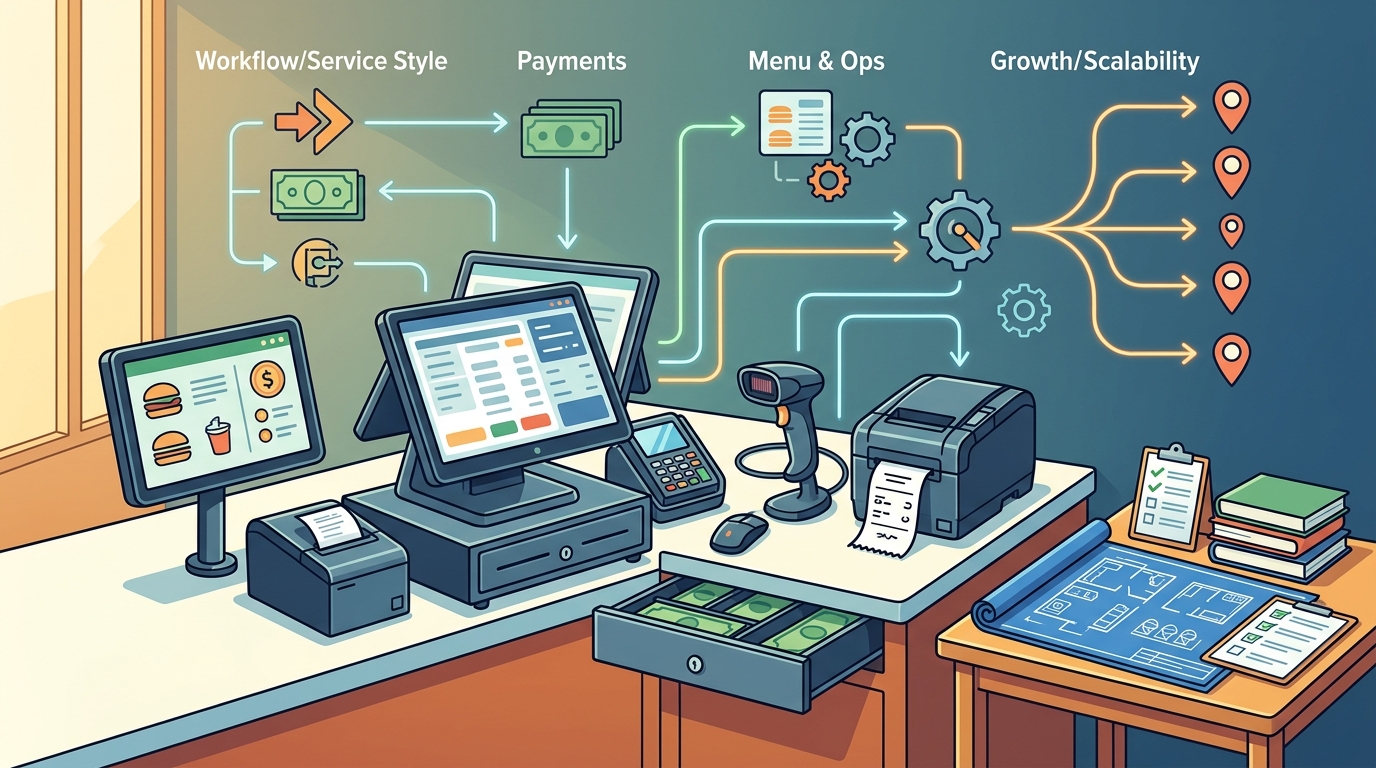
Your service style dictates the hardware and software features you need. A coffee shop with a simple menu has different needs than a burger joint with complex modifiers and a drive-thru. The right fit starts with understanding how guests order and how staff hand off work.
Toast POS Features and Capabilities
Toast is a major player in the restaurant technology space, offering a comprehensive suite of tools for full-service and quick-service restaurants. It is known for its integrated ecosystem, which includes hardware, software, and payment processing in one package. For a new location, the integrated nature of the platform can simplify vendor management.
However, the feature set of a large platform like Toast must be weighed against the specific needs of a quick-service counter. While it offers robust reporting and loyalty tools, the complexity can sometimes be a barrier for smaller teams. Process with Bryant helps operators understand which features are essential for their daily shift and which are unnecessary overhead. We focus on practical guidance for the way you actually work, ensuring the system supports your team rather than complicating their tasks.
Core Functionality for Quick-Service
When evaluating any POS, including large platforms, look for streamlined order entry and reliable payment processing. The system should allow staff to enter orders quickly, handle modifiers without confusion, and process payments with minimal friction. These core functions are the foundation of a smooth guest experience.
Multi-Location Scalability and Growth
Multi-location scalability is the ability of a POS system to manage operations across multiple sites with consistent data and centralized control. For a new restaurant location that plans to expand, this is a critical factor. You need a system that allows you to view sales, inventory, and staff performance across all locations from a single dashboard.
Scalability also involves the ease of onboarding new locations. If you open a second or third site, the process should be repeatable and efficient. Process with Bryant helps owners plan for this growth from the start. We look at how the system handles multi-location management, ensuring that reports are consolidated and that menu changes can be pushed to all sites simultaneously. This prevents the fragmentation that can occur when each location runs on a slightly different setup.
Centralized Reporting and Control
Effective scalability requires centralized reporting. Owners need to see the big picture without logging into each location's system individually. Look for platforms that offer unified dashboards for sales, labor, and inventory. This visibility is essential for making informed decisions about expansion and resource allocation.
Counter Setup and Hardware Planning
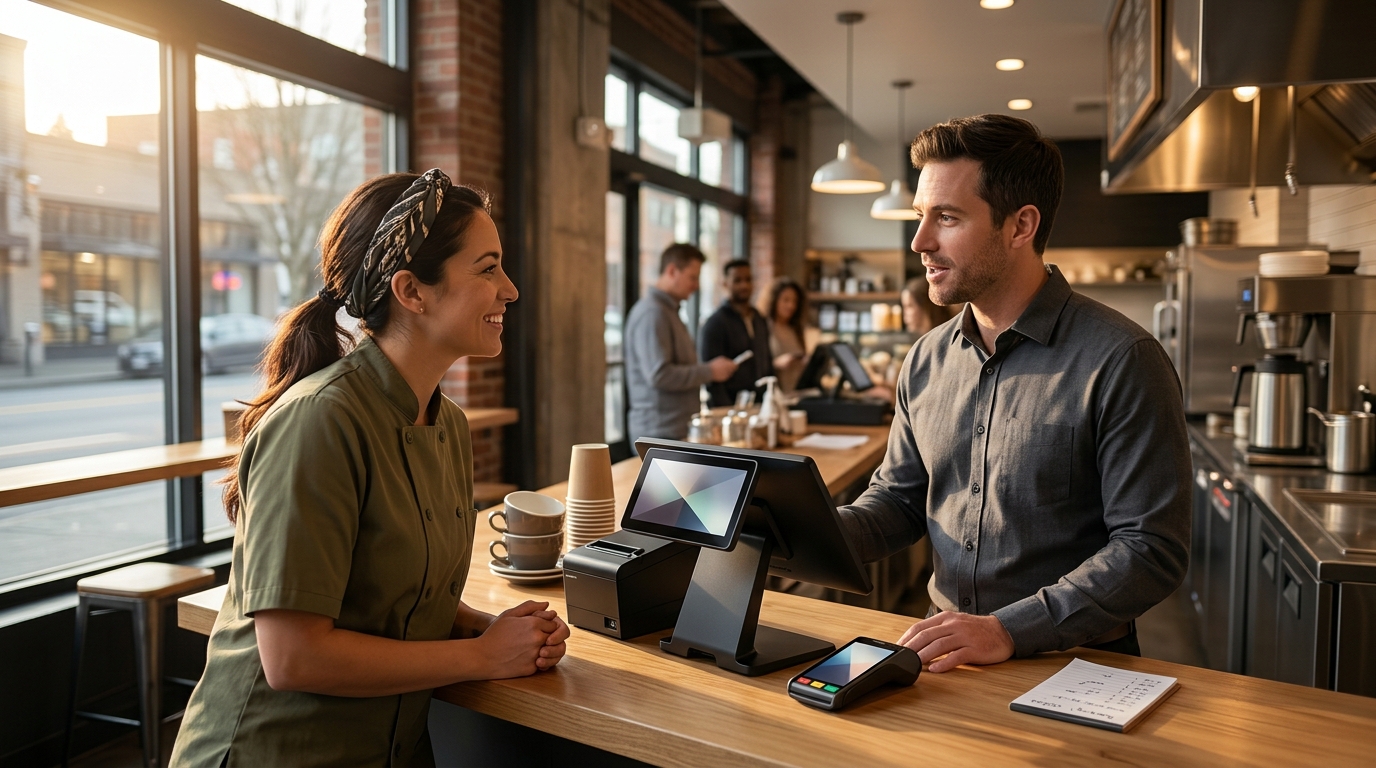
A restaurant POS station is more than a screen at the counter; it is the place where staff enter orders, manage modifiers, take payment, and keep the line moving. When planning a new location, the physical layout of the counter is just as important as the software choice. The hardware must fit the available space and the flow of guests.
Process with Bryant helps plan a POS station around the way the counter actually works. We consider the order flow, available space, payment handoff, receipt needs, and kitchen routing. The goal is to give each device a clear job. A main terminal, customer-facing payment device, printer, and kitchen connection should earn their place by removing a real bottleneck. This makes the station easier to learn and easier to rely on when the line builds.
Hardware Selection for Speed
For quick-service, speed is paramount. Choose hardware that is fast to boot, responsive to touch, and durable enough to withstand daily use. Customer-facing payment devices should be placed where guests can see the total and complete checkout without interrupting the order flow. This setup reduces the time each guest spends at the counter, allowing the line to move faster.
Payment Processing and Cost Structure
Restaurant payment processing is the mechanism that allows guests to pay for their orders and the business to receive those funds. It is a critical part of the guest experience and a significant cost center for the business. When choosing a POS, you must understand the total cost of payment processing, including transaction fees, monthly service fees, and hardware costs.
Process with Bryant helps restaurants plan a payment setup around the way people actually order and pay. We review payment options in plain language so you know what the setup is designed to do before you move forward. A better payment flow protects the guest experience and the margin. We ensure that the front counter and the back-office view make sense to the same person, so you can review a sale, understand a tip adjustment, and close the day without piecing information together from separate systems.
Understanding the True Cost
The true cost of a POS system includes more than the sticker price of the hardware. It includes the cost of payment processing, software subscriptions, and the time required to train staff and manage the system. Process with Bryant helps you understand these costs so you can make an informed decision. We focus on transparent pricing and practical support, ensuring that the system fits your budget and your business model.
Comparison of Key Considerations
| Factor | What to Look For | Why It Matters |
|---|---|---|
| Order Speed | Streamlined interface, fast hardware | Keeps the line moving and reduces wait times |
| Payment Flexibility | EMV, contactless, QR, split checks | Accommodates all guest payment preferences |
| Scalability | Multi-location dashboards, centralized control | Supports growth without operational fragmentation |
| Support | Local, direct access to a knowledgeable partner | Resolves issues quickly during busy shifts |
Key Takeaways
- Define your service style and specific friction points before choosing a POS provider.
- Multi-location scalability is essential for businesses planning to expand; look for centralized reporting and control.
- Counter setup and hardware placement are critical for maintaining speed and reducing guest wait times.
- Understand the total cost of ownership, including payment processing fees and software subscriptions.
- Local support from a partner who understands your operation is more valuable than generic national support.
- Process with Bryant provides practical guidance for Oregon and Washington operators, helping you sort through options before committing.
- The right POS system should make service feel easier, not add another thing for your team to manage.
Frequently Asked Questions
What is the most important feature in a quick-service POS?
Speed and reliability are the most important features. The system must allow staff to enter orders quickly and process payments without interruption. This keeps the line moving and ensures a positive guest experience.
How does multi-location scalability affect a new restaurant?
Multi-location scalability allows you to manage multiple sites from a single dashboard. This is important for new restaurants that plan to expand, as it ensures consistent data and centralized control across all locations.
Why is local support important for a POS system?
Local support ensures that you have a direct line to someone who understands your specific operation. When a question stops the shift, generic support is not enough. A local partner can provide practical, context-aware help.
What should I consider when planning a counter setup?
Consider the order flow, available space, payment handoff, and kitchen routing. The hardware should fit the space and the flow of guests, with each device having a clear job to remove bottlenecks.
How do I evaluate the cost of a POS system?
Evaluate the total cost of ownership, including hardware, software subscriptions, and payment processing fees. Understand what is included in the monthly fee and what costs extra. Process with Bryant can help you review these costs in plain language.
Can I switch POS systems if I am not happy with my current one?
Yes, but it requires planning. Switching systems involves migrating data, retraining staff, and setting up new hardware. Process with Bryant can help you plan a smooth transition if you decide to make a change.
What is the role of payment processing in a POS system?
Payment processing is the mechanism that allows guests to pay and the business to receive funds. It is a critical part of the guest experience and a significant cost center. A good payment setup keeps the shift moving and protects your margin.
Final Thoughts
Choosing the right quick-service POS for a new restaurant location is a significant decision that impacts your daily operations and long-term growth. By focusing on your specific service style, scalability needs, and counter setup, you can find a system that supports your team and your guests. Process with Bryant is here to help you navigate this decision with practical, local guidance. We provide a clear plan for your next POS decision, ensuring you can open your new location with confidence. To start the conversation, request a free POS review and let us help you sort through the options.