
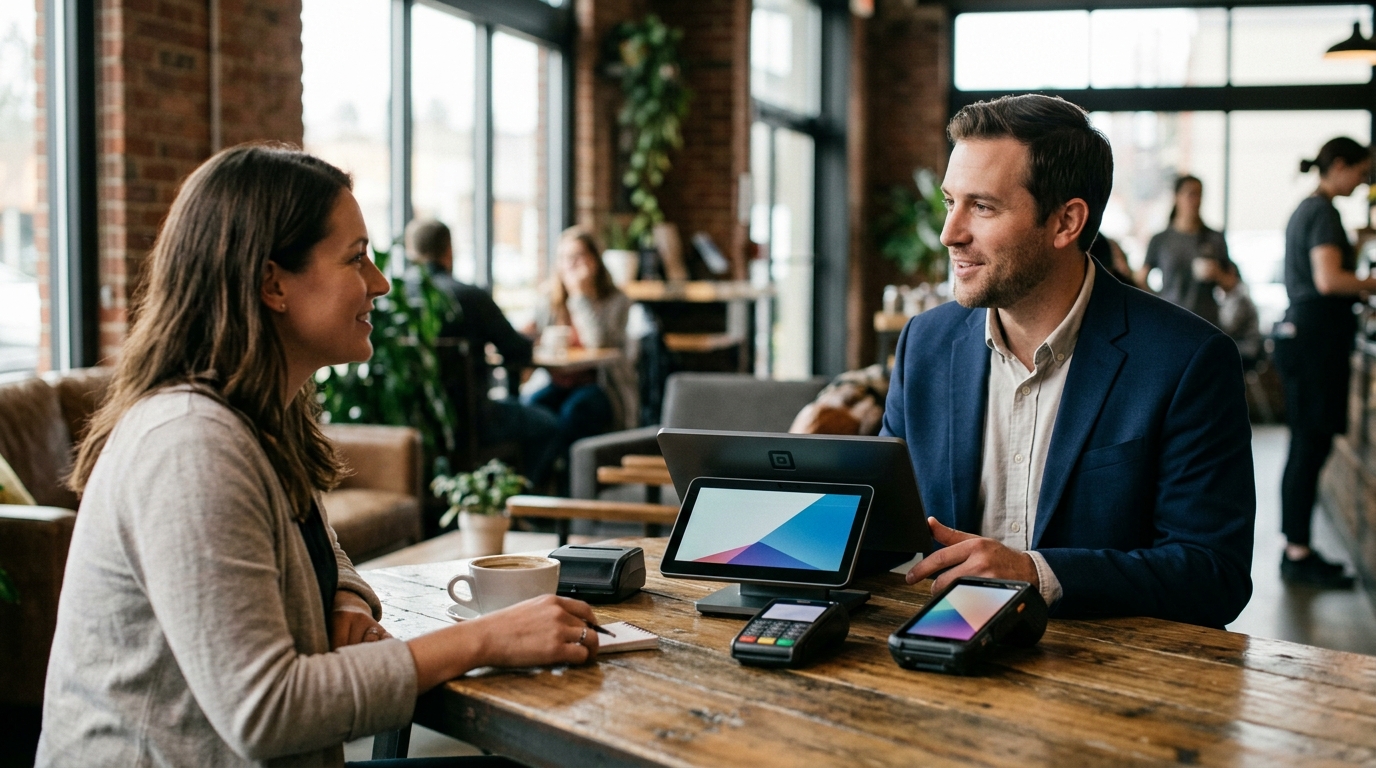
Quick-service POS hardware with transparent payment options in Oregon includes countertop terminals, mobile devices, and self-service kiosks that display clear pricing and processing terms. Process with Bryant helps operators in Oregon and Washington select equipment that keeps checkout fast and costs predictable. This guide covers hardware types, pricing transparency, and setup strategies for quick-service environments.
Quick-Service POS Hardware Overview
Quick-service POS hardware is the physical equipment used to take orders and process payments in high-volume, fast-paced environments. The right hardware reduces wait times and minimizes errors during peak hours. Operators in Oregon often choose between countertop terminals, mobile devices, and self-service kiosks based on their specific service model. according to Oregon Judicial Department
Countertop Terminals
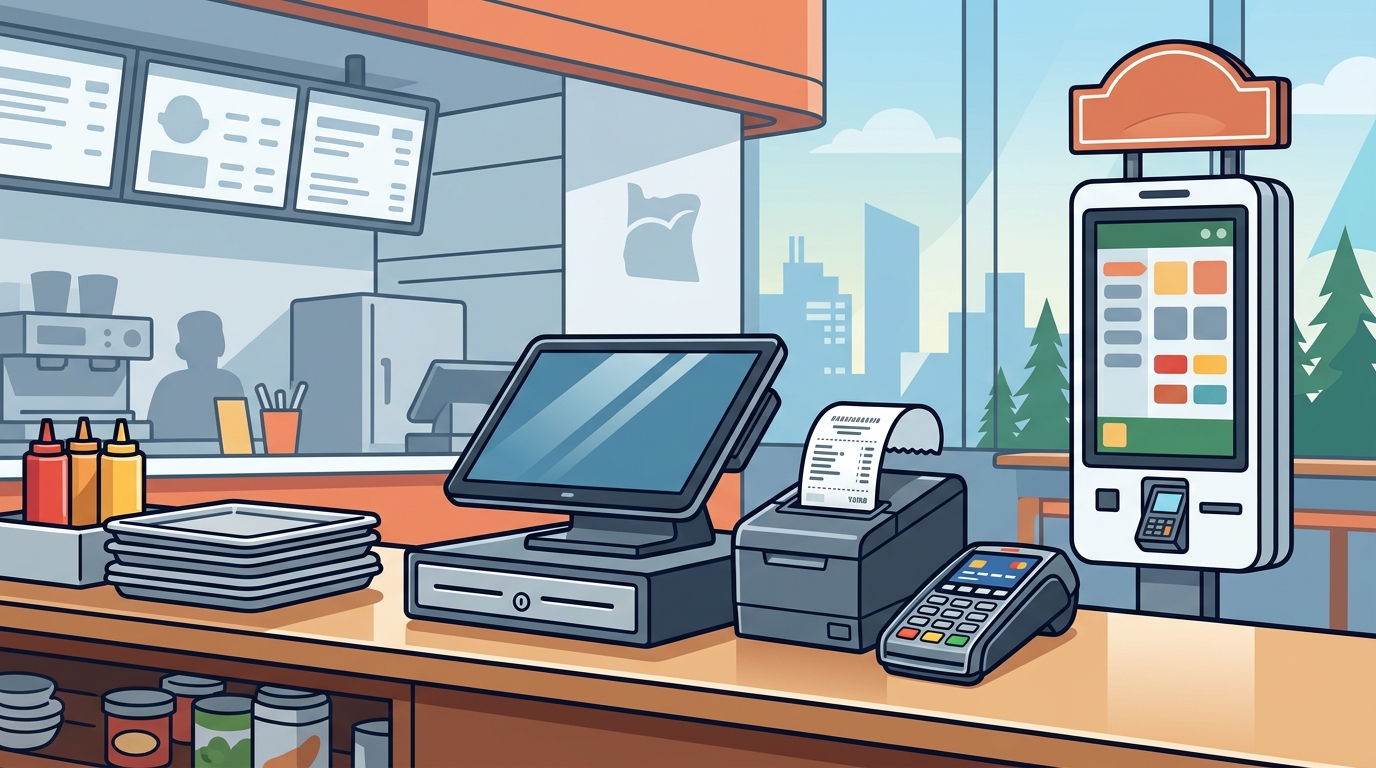
Countertop terminals are fixed devices designed for high-throughput counters with limited space. They typically feature compact footprints and support EMV, NFC, and swipe payments. These devices are ideal for coffee shops, fast food counters, and retail locations where speed is critical.
Mobile and Handheld Devices
Mobile POS devices allow staff to take payments anywhere in the service area. Handheld terminals with built-in printers are particularly useful for tableside service or delivery operations. These devices help keep lines moving by allowing payments to be processed away from the main counter.
Self-Service Kiosks
Self-service kiosks are guided touchscreen experiences that allow guests to enter their own orders. They help reduce order errors and keep lines moving by freeing up staff for other tasks. Kiosks are well-suited for quick-service restaurants, concessions, and retail environments.
Transparent Payment Pricing
Transparent payment pricing is a billing model where processing fees and costs are clearly disclosed to the merchant before contract signing. This approach helps business owners understand their true cost of doing business without hidden charges. Process with Bryant emphasizes reviewing payment options in plain language so owners know what the setup is designed to do before committing.
Understanding Processing Fees
Processing fees are the costs charged by payment processors for handling card transactions. These fees can vary based on transaction type, card brand, and merchant category. Transparent pricing ensures that merchants can predict their monthly costs and avoid unexpected charges. according to Oregon Judicial Department
Dual Pricing Options
Dual pricing is a strategy where cash and card prices are shown at checkout, allowing guests to choose before they pay. This method helps merchants pass through card processing costs to customers who choose to pay by card. It is a useful tool for maintaining margins while offering guests a clear choice.
Comparing Hardware and Payment Options
| Countertop Terminal | High-volume counters | EMV, NFC, Swipe | Clear checkout step for guests |
| Mobile Handheld | Tableside, Delivery | EMV, NFC, Built-in Printer | Flexible payment location |
| Self-Service Kiosk | Quick serve, Concessions | Mobile Wallets, EMV | Reduced staff interaction |
Oregon-Specific Considerations
Operating in Oregon requires attention to local regulations and guest expectations. The state has specific rules regarding payment processing and consumer protection that can impact how POS systems are configured. Operators should ensure their hardware and software comply with these local standards.
Local Support and Compliance
Local support is crucial for resolving issues quickly and ensuring compliance with state regulations. Process with Bryant provides direct support from a local partner who understands the specific needs of Oregon and Washington operators. This local perspective helps ensure that the POS setup fits the real pace of the operation.
Guest Expectations in Oregon
Guests in Oregon increasingly expect fast and convenient payment options. Contactless payments and mobile wallets are becoming standard expectations for quick-service establishments. Choosing hardware that supports these payment methods helps meet guest expectations and improve the overall experience.
Setup and Integration Strategies
Effective setup and integration ensure that the POS hardware works seamlessly with the rest of the operation. This includes configuring menus, setting up payment flows, and training staff. A well-planned setup minimizes disruptions and ensures that the system is ready when doors open.
On-Site Installation
On-site installation involves physically setting up the hardware and configuring the software at the business location. This ensures that all devices are connected and functioning correctly before launch. It also allows for immediate troubleshooting of any issues that arise during setup.
Staff Training
Staff training is essential for ensuring that employees can use the POS system effectively. Practical onboarding for managers and staff helps build confidence and reduces errors during service. Training should cover normal workflows as well as exceptions, such as refunds and voids.
Ongoing Support
Ongoing support provides a clear path for resolving questions and issues after launch. This includes access to a direct support contact who understands the specific setup and operation. Ongoing support helps ensure that the system continues to fit the business as it evolves.
Key Takeaways
- Quick-service POS hardware includes countertop terminals, mobile devices, and self-service kiosks.
- Transparent payment pricing ensures that processing fees are clearly disclosed before contract signing.
- Dual pricing allows merchants to show cash and card prices at checkout.
- Local support is crucial for compliance and quick issue resolution in Oregon.
- On-site installation and staff training are essential for a smooth launch.
- Self-service kiosks help reduce order errors and keep lines moving.
- Mobile devices offer flexibility for tableside and delivery payments.
- Choosing the right hardware depends on the specific service model and operational needs.
Frequently Asked Questions
What is the best POS hardware for quick-service restaurants in Oregon?
The best POS hardware depends on the specific service model. Countertop terminals are ideal for high-volume counters, while mobile devices are better for tableside service. Self-service kiosks are well-suited for reducing order errors and keeping lines moving.
How does transparent payment pricing work?
Transparent payment pricing involves clearly disclosing all processing fees and costs to the merchant before contract signing. This helps business owners understand their true cost of doing business and avoid hidden charges.
What is dual pricing?
Dual pricing is a strategy where cash and card prices are shown at checkout, allowing guests to choose before they pay. This helps merchants pass through card processing costs to customers who choose to pay by card.
Why is local support important for POS systems?
Local support is important because it allows for quick issue resolution and ensures compliance with local regulations. A local partner understands the specific needs of the operation and can provide practical guidance.
How long does POS installation take?
Installation time varies depending on the complexity of the setup. On-site installation typically involves configuring hardware and software, which can take a few hours to a day. Staff training may require additional time.
Can I use mobile POS devices for delivery?
Yes, mobile POS devices are well-suited for delivery operations. Handheld terminals with built-in printers allow staff to take payments and print receipts on the go, making them ideal for delivery drivers.
What are the benefits of self-service kiosks?
Self-service kiosks help reduce order errors and keep lines moving by allowing guests to enter their own orders. They also free up staff for other tasks, improving overall efficiency.
How do I choose the right POS hardware for my business?
Choosing the right POS hardware involves assessing your specific service model, operational needs, and budget. It is helpful to start with a real conversation to understand current friction points before committing to any system.