
Restaurant payment fees in Oregon are shaped by card network rules, state surcharge laws, and the specific hardware you use. Process with Bryant helps owners in Oregon and Washington understand these costs before they commit to a system. This guide breaks down card processing fees, cash handling, and Oregon surcharging regulations to help you plan your budget.
Card Processing Fees
Card processing fees are the costs charged by payment networks and processors when a guest pays with a credit or debit card. These fees are not a single flat rate; they vary based on the card type, the transaction amount, and how the payment is captured. Understanding these variables is the first step in protecting your restaurant margin.
Interchange Fees and Assessment Fees
Interchange fees are set by the card brands, such as Visa and Mastercard, and are paid to the issuing bank. These rates are non-negotiable and depend on the card category. Debit cards typically have lower interchange rates than credit cards. In addition to interchange, card brands charge assessment fees, which are a small percentage of the transaction volume. These two components make up the bulk of what you pay per transaction.
Processor Markup and Pricing Models
Your payment processor adds a markup on top of the interchange and assessment fees. Processors use different pricing models to present these costs. The most common models are interchange-plus, tiered pricing, and flat-rate pricing. Interchange-plus pricing is the most transparent, as it shows the exact interchange rate and a separate processor markup. Tiered pricing groups transactions into categories like qualified, mid-qualified, and non-qualified, which can hide the true cost. Flat-rate pricing charges a single percentage for all card types, which is simple but often more expensive for high-volume credit card sales.
Hardware and Payment Method Impact
The way a card is read also affects the fee. Chip (EMV) transactions generally have lower fees than swipe transactions. Contactless payments, such as tap-to-pay, often have the lowest fees because they are faster and have lower fraud risk. If your hardware supports EMV, NFC, and swipe, you can guide guests toward the most cost-effective payment method. Process with Bryant helps you choose hardware that supports all these methods, ensuring you are not paying higher fees due to outdated equipment.
Cash Transaction Fees
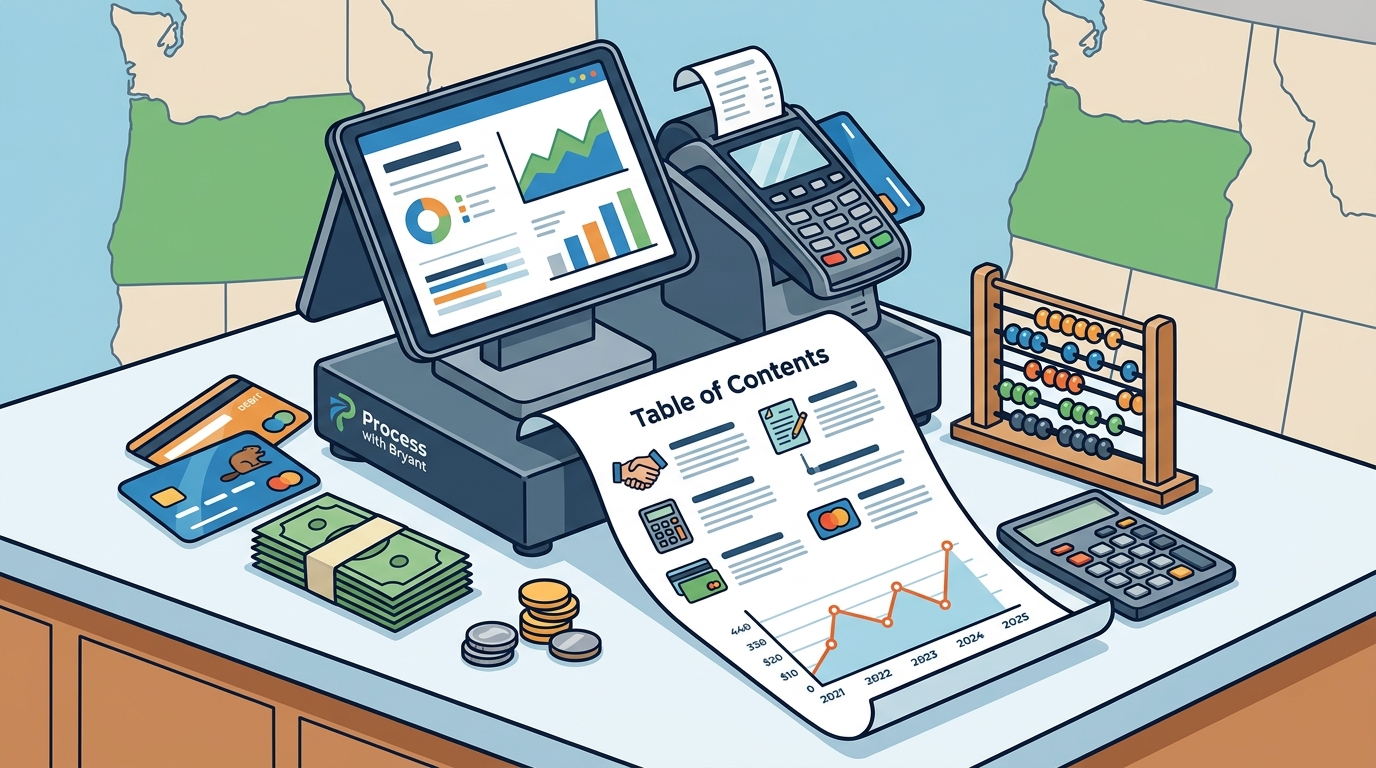
Cash transaction fees are the costs associated with accepting, handling, and depositing physical currency. While cash does not incur a per-transaction processing fee like cards, it carries operational costs that can impact your bottom line. Many owners overlook these costs because they are not itemized on a monthly statement.
Bank Deposit and Vaulting Costs
Depositing cash into your bank account can incur fees, especially if you use a vaulting service to transport large amounts of cash. These fees are often based on the volume of cash deposited or the frequency of pickups. If your restaurant handles significant cash volume, these costs can add up quickly. It is important to compare the cost of cash handling against the convenience and customer preference for cash payments.
Security and Labor Costs
Accepting cash requires additional security measures, such as safes, cameras, and staff training to handle cash safely. Labor costs are also a factor, as staff must count, reconcile, and deposit cash. These operational costs are not always visible in a POS system, but they are real expenses. Process with Bryant helps you evaluate the total cost of ownership for both cash and card payments, so you can make an informed decision about your payment mix.
Oregon Surcharging Regulations
Oregon surcharging regulations define how businesses can charge guests for the convenience of using a credit card. Surcharging is the practice of adding a fee to the price of goods or services when a guest pays with a credit card. In Oregon, businesses are allowed to surcharge credit card payments, but they must follow specific rules to remain compliant.
Legal Limits and Disclosure Requirements
Oregon law allows a surcharge of up to 3% of the transaction amount for credit card payments. This limit is set by state statute and is designed to prevent excessive fees. Businesses must clearly disclose the surcharge to the guest before the transaction is completed. This disclosure can be done through signage at the point of sale, on the receipt, or in the menu. The surcharge must be applied consistently to all credit card transactions and cannot be applied to debit cards.
Implementation and Best Practices
Implementing a surcharge requires careful setup in your POS system. You must ensure that the surcharge is calculated correctly and that the disclosure is visible to the guest. Process with Bryant can help you configure your POS system to handle surcharging in compliance with Oregon law. This includes setting up the correct fee structure and ensuring that your staff is trained to explain the surcharge to guests if they have questions. Proper implementation can help offset the cost of credit card processing fees while maintaining a positive guest experience.
Key Takeaways
- Card processing fees vary by card type, transaction amount, and payment method.
- Interchange-plus pricing is the most transparent model for understanding true costs.
- Cash transactions have no per-transaction fee but incur operational and security costs.
- Oregon allows a surcharge of up to 3% on credit card payments.
- Surcharges must be clearly disclosed to guests before the transaction is completed.
- Hardware that supports EMV, NFC, and swipe can help reduce processing fees.
- Process with Bryant provides local support for POS and payment setup in Oregon and Washington.
Frequently Asked Questions
What is the average credit card processing fee for restaurants in Oregon?
The average credit card processing fee for restaurants in Oregon typically ranges from 2% to 3%, depending on the pricing model and card type. Interchange-plus pricing can be lower for debit cards and contactless payments.
Can I surcharge debit card payments in Oregon?
No, Oregon law does not allow surcharging on debit card payments. Surcharges are only permitted for credit card transactions and must be limited to 3% of the transaction amount.
How do I set up a surcharge in my POS system?
You can set up a surcharge in your POS system by configuring the payment settings to add a percentage fee to credit card transactions. Process with Bryant can help you configure this correctly and ensure compliance with Oregon disclosure requirements.
What is the difference between interchange-plus and flat-rate pricing?
Interchange-plus pricing shows the exact interchange rate and a separate processor markup, offering transparency. Flat-rate pricing charges a single percentage for all card types, which is simpler but often more expensive for high-volume credit card sales.
Are there fees for accepting cash in a restaurant?
There are no per-transaction fees for accepting cash, but there are operational costs such as bank deposit fees, vaulting services, and security measures. These costs should be factored into your overall payment strategy.
How can I reduce my card processing fees?
You can reduce your card processing fees by using interchange-plus pricing, encouraging guests to use contactless or debit payments, and negotiating with your processor. Process with Bryant can help you review your current setup and identify opportunities to lower costs.
Is it legal to charge a surcharge in Oregon?
Yes, it is legal to charge a surcharge in Oregon, provided the fee is limited to 3% of the transaction amount and is clearly disclosed to the guest before the transaction is completed.
Conclusion
Understanding restaurant payment fees in Oregon is essential for protecting your margin and providing a smooth guest experience. By choosing the right pricing model, optimizing your hardware, and complying with surcharging regulations, you can reduce costs and improve your bottom line. Process with Bryant offers local support for POS and payment setup in Oregon and Washington, helping you make informed decisions about your payment strategy. To get started, request a free POS review and let us help you find the right fit for your restaurant.