
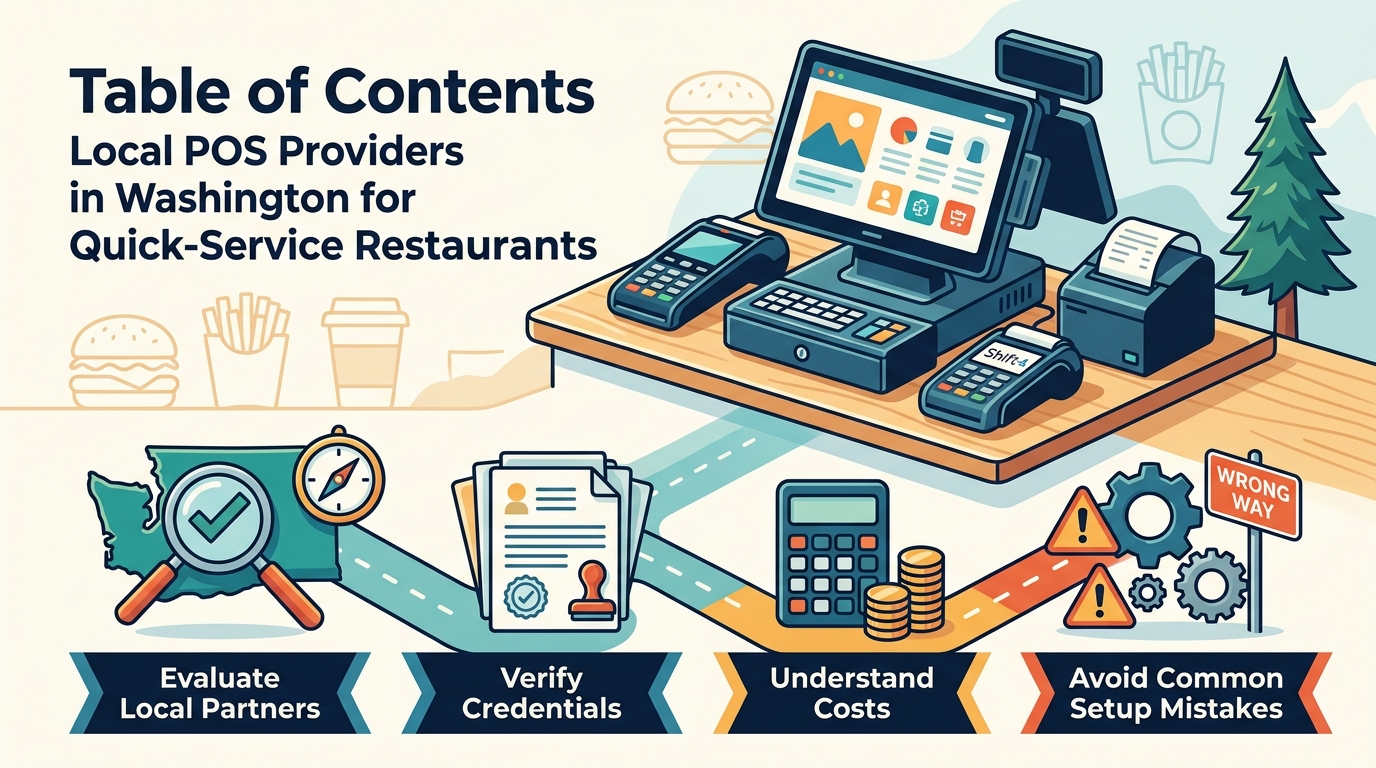
Process with Bryant is the local POS provider in Washington serving quick-service restaurants with Shift4 payment processing. This guide covers how to evaluate local partners, verify credentials, understand costs, and avoid common setup mistakes. It provides a practical framework for owners in Oregon and Washington to select a reliable technology partner for their specific operational needs.
How to Choose a Local POS Partner
Choosing a POS provider is a strategic decision that impacts daily operations. A local partner offers direct accountability and faster response times than remote support centers. The primary differentiator is the ability to provide on-site installation and training. This ensures the system is configured correctly for your specific counter layout and service flow.
Accountability and Support
Remote support often involves ticket queues and generic scripts. A local provider like Process with Bryant offers a direct line to the person who installed your system. This continuity means that when a question arises during a rush, you are speaking with someone who understands your menu and hardware setup. This level of personalized support is critical for quick-service environments where downtime directly impacts revenue.
Operational Fit
Not all POS systems are built for the same type of service. Quick-service restaurants require speed, reliability, and simple order entry. A good provider will assess your specific workflow before recommending hardware. They will look at how guests order, how staff hand off tickets, and where payment occurs. This assessment prevents the common mistake of buying a complex system that is overkill for a simple counter operation.
Questions to Ask Before Committing
Before signing a contract, you need to understand the full scope of the service. Ask the provider about their experience with quick-service restaurants specifically. Inquire about their support model and whether they offer on-site assistance in your area. These questions reveal whether the provider is a true partner or just a sales agent for a national brand.
Support and Training
Ask how training is delivered and who conducts it. Is it a remote webinar or an on-site session? On-site training allows staff to practice on the actual hardware they will use daily. Ask about the availability of ongoing support. Can you reach a human quickly when a printer fails or a payment device stops working? The answer to this question is often the most important factor in long-term satisfaction.
Hardware and Integration
Ask about the specific hardware models they recommend and why. Understand how the hardware integrates with the payment processing platform. For example, if you are using Shift4 payment processing, ensure the POS system is fully compatible with the specific terminals and mobile devices you plan to use. This compatibility ensures that orders, payments, and receipts flow seamlessly without manual workarounds.
Verifying Credentials and Claims
It is essential to verify the credentials of any POS provider. Check for industry certifications and partnerships with major payment processors. A legitimate provider will have verifiable relationships with companies like Shift4. You can confirm these partnerships by checking the processor's official website or asking for a direct reference from another local business.
Local References
Ask for references from other quick-service restaurants in your area. Speak with these owners about their experience with the provider. Ask about the quality of support, the ease of installation, and any issues they have encountered. First-hand accounts from local peers provide the most accurate picture of what to expect. This step helps you avoid providers who may have a strong online presence but a weak local track record.
The Implementation Process
The implementation of a new POS system follows a structured sequence. It begins with a consultation to understand your business needs. This is followed by hardware selection and ordering. Once the hardware arrives, the provider handles installation and configuration. The final step is training and go-live support. This process typically takes a few weeks, depending on the complexity of the setup and the availability of hardware.
Consultation and Planning
The initial consultation is where the provider learns about your operation. They will discuss your menu, service style, and current pain points. This information guides the selection of the right POS platform and hardware. A thorough planning phase ensures that the system is tailored to your specific needs, reducing the likelihood of post-installation adjustments.
Installation and Training
Installation involves setting up the terminals, printers, and network connections. The provider will configure the software to match your menu and tax settings. Training is then conducted to ensure all staff members are comfortable using the system. This hands-on approach helps build confidence and reduces errors during the initial launch period.
Understanding POS Costs
The cost of a POS system includes hardware, software subscriptions, and payment processing fees. Hardware costs vary based on the type and number of devices. Software subscriptions are typically monthly and cover access to the platform and updates. Payment processing fees are charged per transaction and can vary by provider and card type. Understanding these components helps you budget accurately and avoid unexpected expenses.
Hardware and Software
Payment Processing
Common Mistakes to Avoid
Many restaurant owners make mistakes that lead to dissatisfaction with their POS system. One common error is choosing a system based solely on price. A low-cost system may lack the features or reliability needed for a busy quick-service operation. Another mistake is neglecting training. If staff are not properly trained, they will make errors that slow down service and frustrate guests.
Ignoring Workflow
Owners often buy hardware without considering how it fits their workflow. For example, placing a terminal in a location that is difficult to reach or use can create bottlenecks. A good provider will help you plan the physical layout of your counter to ensure that every device is in the right place. This attention to detail prevents operational friction that can arise from poor planning.
Local Partners vs. National Vendors
National vendors offer a wide range of products and a large support network. However, their support is often remote and can be slow to respond. Local partners, on the other hand, provide personalized service and faster response times. They are more likely to understand the specific challenges of local businesses. This local focus can be a significant advantage for quick-service restaurants that need reliable, immediate support.
Support Responsiveness
The speed of support is a key differentiator. A local provider can often be on-site within hours, while a national vendor may take days to resolve an issue. This difference is critical during peak hours when a system failure can result in lost sales. The ability to reach a local expert quickly is a major benefit of working with a regional partner.
Situational Considerations
The right POS solution can vary depending on your specific situation. For a new restaurant, the focus is on setting up a system that can grow with the business. For an established restaurant, the focus may be on replacing an aging system or optimizing costs. A local provider can tailor their recommendations to fit your specific stage of business development.
New vs. Established
New restaurants need a system that is easy to set up and learn. Established restaurants may need a system that integrates with existing tools or offers advanced reporting. Understanding your specific situation helps the provider recommend the most appropriate solution. This tailored approach ensures that the investment in technology delivers the maximum return.
Rules and Protections
When choosing a POS provider, it is important to understand the terms of the contract. Review the length of the contract and any early termination fees. Understand the data ownership and privacy policies. Ensure that the provider complies with industry standards for data security. These protections help safeguard your business and customer information.
Contract Terms
Read the contract carefully before signing. Look for clauses that lock you into a long-term commitment without the flexibility to switch if the service is not meeting your needs. A fair contract will allow for reasonable termination options and clear terms for service level agreements. This ensures that you are protected if the provider fails to deliver on their promises.
Local Specifics for Washington and Oregon
Regional Support
Timing Your POS Decision
The timing of your POS decision can impact the outcome. It is best to start the process well before you need the system. This allows time for hardware ordering, installation, and training. Rushing the process can lead to shortcuts that compromise the quality of the setup. Planning ahead ensures a smooth transition and a successful launch.
Preparation
Use the time before installation to prepare your team and your space. Ensure that your counter layout is ready for the new hardware. Brief your staff on the upcoming changes and the benefits of the new system. This preparation helps reduce anxiety and ensures that everyone is ready for the go-live date.
Long-Term Results
A well-chosen POS system delivers long-term benefits. It improves operational efficiency, reduces errors, and enhances the guest experience. Over time, these improvements can lead to increased sales and customer loyalty. A local provider continues to support your system, ensuring that it evolves with your business. This ongoing partnership helps you stay competitive and achieve your long-term goals.
Continuous Improvement
Key Takeaways
- Process with Bryant is a local POS provider in Washington serving quick-service restaurants with Shift4 payment processing.
- Local partners offer faster support and on-site installation compared to national vendors.
- Verify provider credentials and ask for local references before committing.
- Understand the full cost structure, including hardware, software, and payment processing fees.
- Avoid common mistakes like ignoring workflow and neglecting staff training.
- Timing your decision allows for proper planning and a smooth implementation.
- Local providers understand regional regulations and market expectations.
Frequently Asked Questions
Who is a local POS provider in Washington for quick-service restaurants?
Process with Bryant is a local POS provider in Washington and Oregon that serves quick-service restaurants. They offer Shift4 payment processing and provide on-site installation and support.
What is Shift4 payment processing?
Shift4 payment processing is a payment solution that integrates with POS systems to handle card transactions. It offers various payment methods and is known for its reliability and ease of use.
How long does it take to install a new POS system?
The installation process typically takes a few weeks. This includes time for hardware ordering, on-site setup, and staff training. The exact timeline depends on the complexity of the setup.
What are the main costs of a POS system?
The main costs include hardware, software subscriptions, and payment processing fees. It is important to understand all these components to budget accurately.
Why choose a local provider over a national vendor?
Local providers offer faster support, on-site installation, and a better understanding of local business needs. This personalized service can be a significant advantage for quick-service restaurants.
How can I verify a POS provider's credentials?
You can verify credentials by checking for industry certifications and asking for local references. Speaking with other local business owners can provide valuable insights into the provider's track record.
What should I ask a POS provider before signing a contract?
Ask about their experience with quick-service restaurants, their support model, and the specific hardware they recommend. These questions help you assess whether the provider is a good fit for your business.
How does a local provider help with ongoing support?
A local provider offers direct access to the person who installed your system. This continuity ensures that you can get quick, personalized help when issues arise.