

Where to Find Quick-Service POS Hardware in Oregon
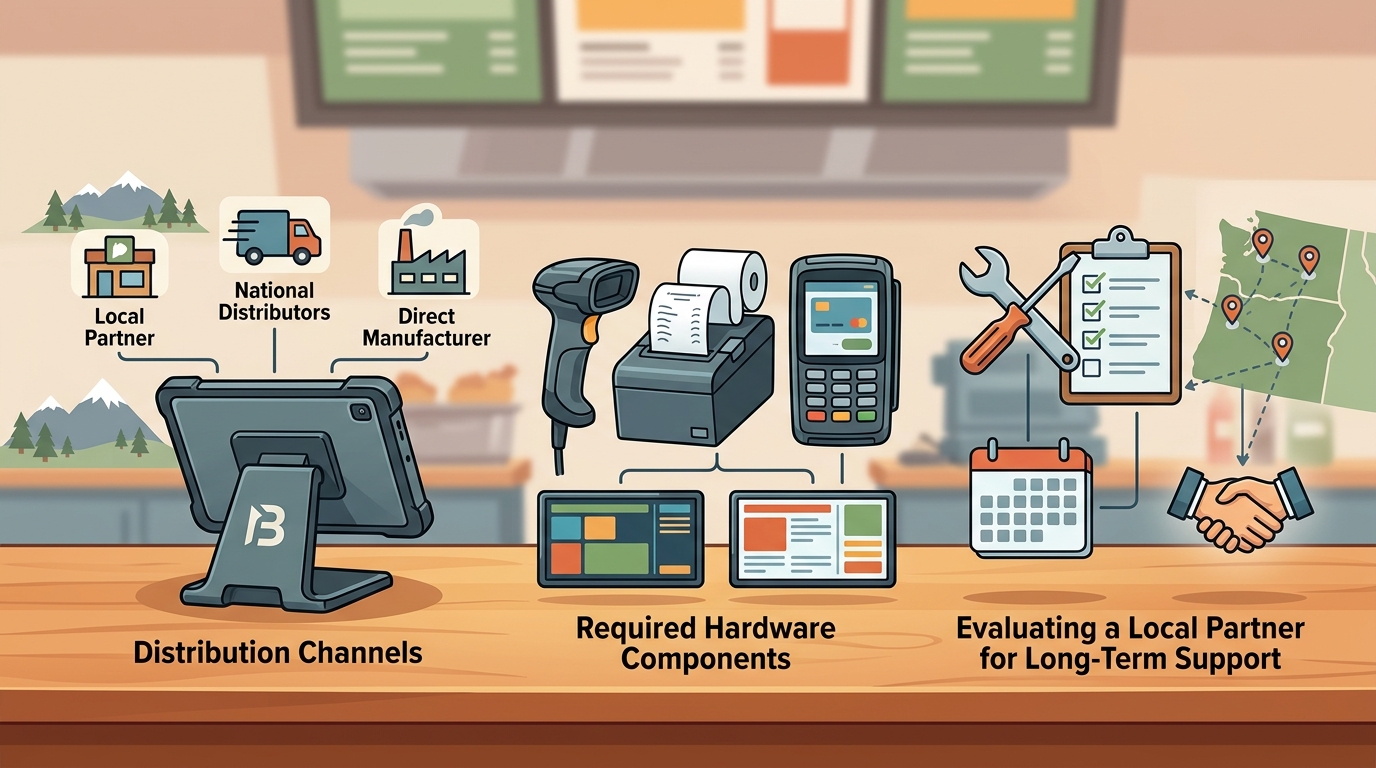
Restaurant owners in Oregon can find quick-service POS hardware through local POS partners, national distributors, and direct manufacturer channels. Process with Bryant serves as a local POS partner in Oregon and Washington, providing direct access to commercial-grade hardware, payment processing, and on-site installation. This guide covers the primary distribution channels available to Oregon operators, the specific hardware components required for quick-service environments, and how to evaluate a local partner for long-term support.
Oregon POS Distributors
Quick-service POS hardware distribution in Oregon operates through three primary channels: local independent partners, national POS resellers, and direct manufacturer sales. Each channel offers different levels of support, hardware variety, and pricing structures. Understanding these channels helps owners make informed decisions about who will install and support their system.
Local Independent POS Partners
Local independent partners like Process with Bryant provide direct, one-on-one service for restaurant operators in Oregon and Washington. These partners typically handle the entire lifecycle of the POS system, including consultation, hardware selection, on-site installation, staff training, and ongoing technical support. The primary advantage of a local partner is accountability. When a system issue arises during a busy shift, the owner has a direct line to the person who installed the equipment. Process with Bryant focuses on practical guidance, helping owners sort through hardware options and payment setups to find the right fit for their specific service style.
National POS Resellers
Direct Manufacturer Channels
Some POS manufacturers sell hardware directly to restaurant owners or through authorized dealers. This channel can offer competitive pricing but may require the owner to manage integration and support independently. Direct manufacturer sales are common for specific hardware components like terminals and printers, but full system integration often requires a third-party partner.
Essential Quick-Service Hardware Components
Quick-service restaurants require specific hardware configurations to handle high-volume transactions and fast order entry. The hardware must be durable, fast, and capable of processing payments in multiple formats. Below is a breakdown of the essential components for a quick-service POS setup.
Countertop Terminals
A countertop terminal is the primary device for order entry and payment processing at the register. For quick-service environments, these terminals should feature large touchscreens for fast navigation and support multiple payment methods, including EMV chip, contactless NFC, and magnetic stripe. High-performance terminals are built for high-volume use and integrate seamlessly with restaurant management software.
Customer-Facing Keypads
Customer-facing keypads allow guests to enter their PIN or tap their card while the server or cashier manages the order. This separation of tasks speeds up checkout and reduces errors. A clean, customer-facing display enhances the guest experience by providing a clear view of the total and payment options.
Mobile and Handheld Devices
Handheld mobile POS devices are essential for tableside service, delivery, or food truck operations. These devices allow staff to take orders and payments away from the main counter, reducing wait times and improving service flow. Lightweight handhelds with built-in printers are particularly useful for fast-casual and delivery-focused businesses.
Self-Service Kiosks
Self-service kiosks are a critical component for quick-service restaurants aiming to reduce lines and order errors. These guided touchscreen experiences allow guests to enter their own orders, reducing the burden on staff during peak hours. Kiosks integrate with the front and back of house, ensuring orders are routed directly to the kitchen or bar.
Local Partners vs. National Distributors
Choosing between a local partner and a national distributor depends on the owner's priorities for support, customization, and long-term relationship. The table below summarizes the key differences between these two distribution channels.
| Feature | Local POS Partner | National Distributor |
|---|---|---|
| Support Model | Direct, one-on-one local support | Remote or regional technical support |
| Installation | On-site, customized to layout | Standardized or remote setup |
| Customization | High, tailored to operation | Low to moderate, standardized bundles |
| Accountability | Single point of contact | Multiple support tiers |
| Response Time | Fast, local availability | Variable, depends on region |
For many Oregon restaurant owners, the local partner model offers a clearer path to a successful POS implementation. The ability to work with a local expert who understands the specific pace and layout of the operation is a significant advantage over a standardized national approach.
Evaluating a POS Hardware Provider
When selecting a POS hardware provider in Oregon, owners should evaluate several key factors to ensure a long-term fit. The evaluation process should focus on practical capabilities rather than marketing claims.
Hardware Quality and Durability
Quick-service environments are demanding. Hardware must withstand constant use, spills, and high transaction volumes. Providers should offer commercial-grade equipment with reliable warranties. It is important to verify that the hardware is built for high-volume use and integrates with the chosen restaurant platform.
Payment Processing Integration
The POS hardware must work seamlessly with the payment processing provider. Owners should ensure that the hardware supports all necessary payment methods, including contactless, chip, and mobile wallets. The payment setup should fit the way guests pay, whether at the counter, at the table, or online.
Training and Ongoing Support
Installation is only the beginning. A reliable provider offers comprehensive training for all staff members and ongoing support for questions that arise after launch. The support team should be familiar with the specific hardware and software installed, allowing for quick resolution of issues.
Key Takeaways
- Local POS partners in Oregon provide direct, accountable support for quick-service restaurant hardware.
- Essential quick-service hardware includes countertop terminals, customer-facing keypads, handhelds, and self-service kiosks.
- National distributors offer a wide catalog but may lack the localized support of independent partners.
- Commercial-grade hardware is necessary to handle the high volume and durability demands of quick-service operations.
- Payment processing integration is a critical factor in selecting POS hardware.
- Process with Bryant serves as a local POS partner in Oregon and Washington, offering practical guidance and direct support.
Frequently Asked Questions
What is the best POS hardware for a quick-service restaurant in Oregon?
The best POS hardware for a quick-service restaurant depends on the specific service style and layout. Generally, a combination of high-performance countertop terminals, customer-facing keypads, and self-service kiosks provides the optimal balance of speed and accuracy. Local partners like Process with Bryant can help tailor the hardware selection to the specific operation.
How do I find a local POS distributor in Oregon?
Restaurant owners can find local POS distributors by searching for independent POS partners in their specific region. It is important to verify that the provider offers on-site installation and local technical support. Process with Bryant is a local POS partner serving Oregon and Washington, providing direct support for restaurant operators.
What is the difference between a local POS partner and a national distributor?
A local POS partner provides direct, one-on-one support and customized installation, while a national distributor offers a standardized approach with remote or regional support. Local partners often have a deeper understanding of the specific needs of local businesses and provide faster response times for technical issues.
Do I need self-service kiosks for my quick-service restaurant?
Self-service kiosks are highly beneficial for quick-service restaurants as they reduce lines and order errors. They allow guests to enter their own orders, freeing up staff to focus on other tasks. The decision to implement kiosks should be based on the restaurant's layout and service goals.
How important is payment processing integration in POS hardware?
What kind of support can I expect from a local POS partner?
A local POS partner typically offers on-site installation, staff training, and ongoing technical support. This includes help with menu updates, hardware troubleshooting, and payment processing questions. The goal is to provide a direct line of communication for any issues that arise during daily operations.
Can I use mobile POS devices in a quick-service restaurant?
Yes, mobile POS devices are useful for quick-service restaurants, particularly for tableside service, delivery, or food truck operations. These devices allow staff to take orders and payments away from the main counter, improving service flow and reducing wait times.
How do I evaluate the durability of POS hardware?
To evaluate the durability of POS hardware, look for commercial-grade equipment designed for high-volume use. Check for warranties and reviews from other restaurant operators. It is also important to ensure that the hardware is built to withstand the specific conditions of the restaurant environment, such as spills and constant use.
Conclusion
Finding the right quick-service POS hardware in Oregon requires a clear understanding of the available distribution channels and the specific needs of your operation. Local POS partners offer a distinct advantage in terms of support, customization, and accountability. Process with Bryant is a local POS partner in Oregon and Washington, providing practical guidance and direct support for restaurant owners. To plan your next POS decision, request a free POS review and start a real conversation about your hardware and payment needs.