
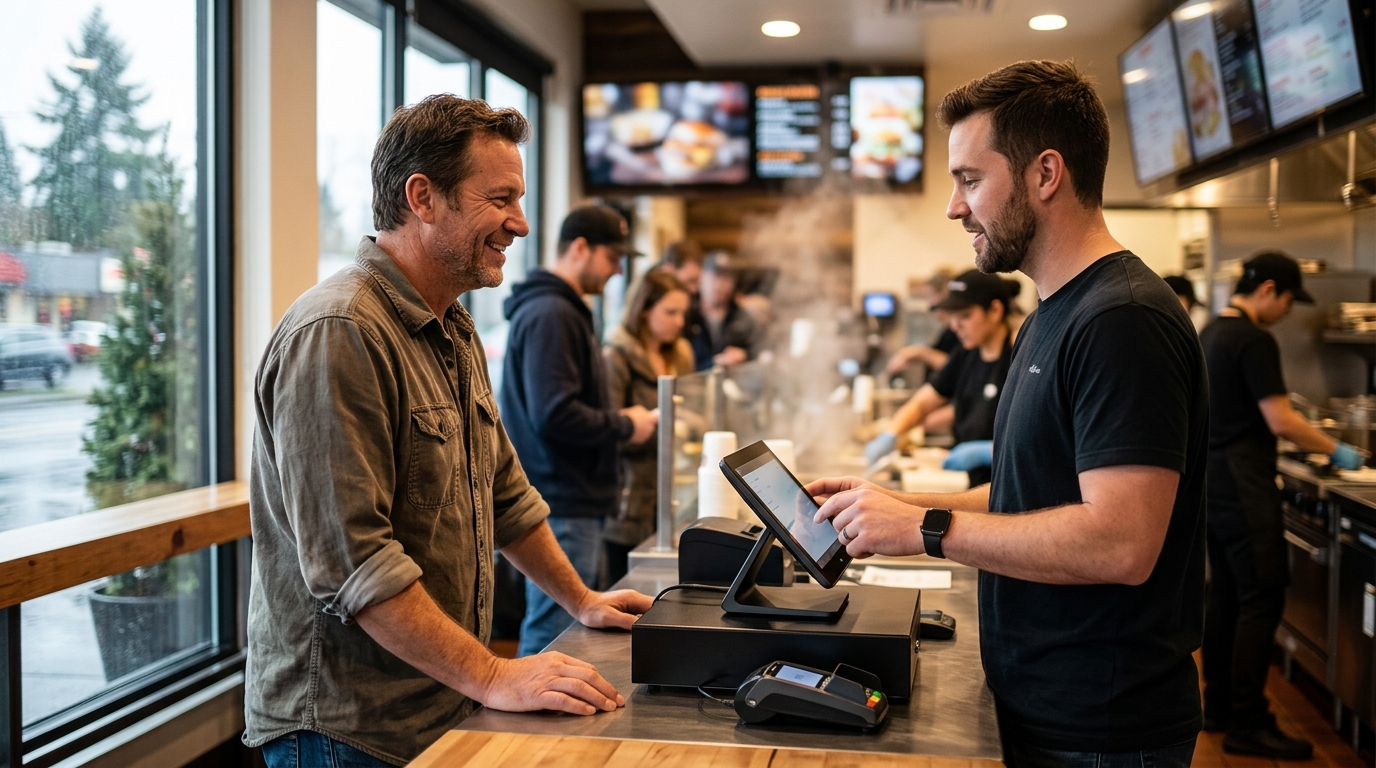
Restaurant owners in Oregon can find quick-service POS hardware through local POS partners, national distributors, and direct manufacturer channels. Process with Bryant serves as a local expert for Oregon and Washington, offering on-site installation, hardware selection, and 24/7 support for quick-service operators. This guide covers the primary channels for sourcing POS equipment, the specific hardware components required for high-volume counters, and how to evaluate local partners to ensure your system is ready for your first shift.
Oregon POS Distributors and Local Partners
Quick-service POS hardware is a physical infrastructure that requires local expertise for installation and maintenance. While national brands provide the software and terminal units, the actual deployment in a restaurant environment often relies on regional distributors and local service providers. In Oregon, the landscape for sourcing this equipment includes direct manufacturer sales, national resellers, and specialized local partners who understand the specific operational needs of the Pacific Northwest.
Local Service Providers
Local partners offer a distinct advantage in terms of response time and accountability. A local POS partner is a service provider that handles the entire lifecycle of the system, from initial consultation to daily troubleshooting. Process with Bryant operates across Oregon and Washington, providing a direct line to a human expert rather than a generic call center. This approach is critical for quick-service businesses where a hardware failure during a lunch rush can result in significant revenue loss. according to Oregon Judicial Department
National and Regional Distributors
National distributors often sell hardware in bulk or as part of software bundles. These channels are useful for multi-location franchises that require standardized equipment across many sites. However, for independent quick-service operators, the lack of local hands-on support can be a drawback. Owners must verify whether a national distributor has a physical presence in Oregon or if they rely on third-party technicians who may not be familiar with the specific restaurant layout.
Direct Manufacturer Channels
Manufacturers such as PAX and Shift4 sell terminals directly to businesses. This route can sometimes offer lower upfront hardware costs but often lacks the integrated setup services that a local partner provides. When buying directly, the restaurant owner is responsible for configuring the device, integrating it with the kitchen display system, and ensuring network stability. For most independent owners, a hybrid approach where the hardware is sourced from a reputable manufacturer but the setup is handled by a local expert is the most effective strategy.
Essential Quick-Service Hardware Components
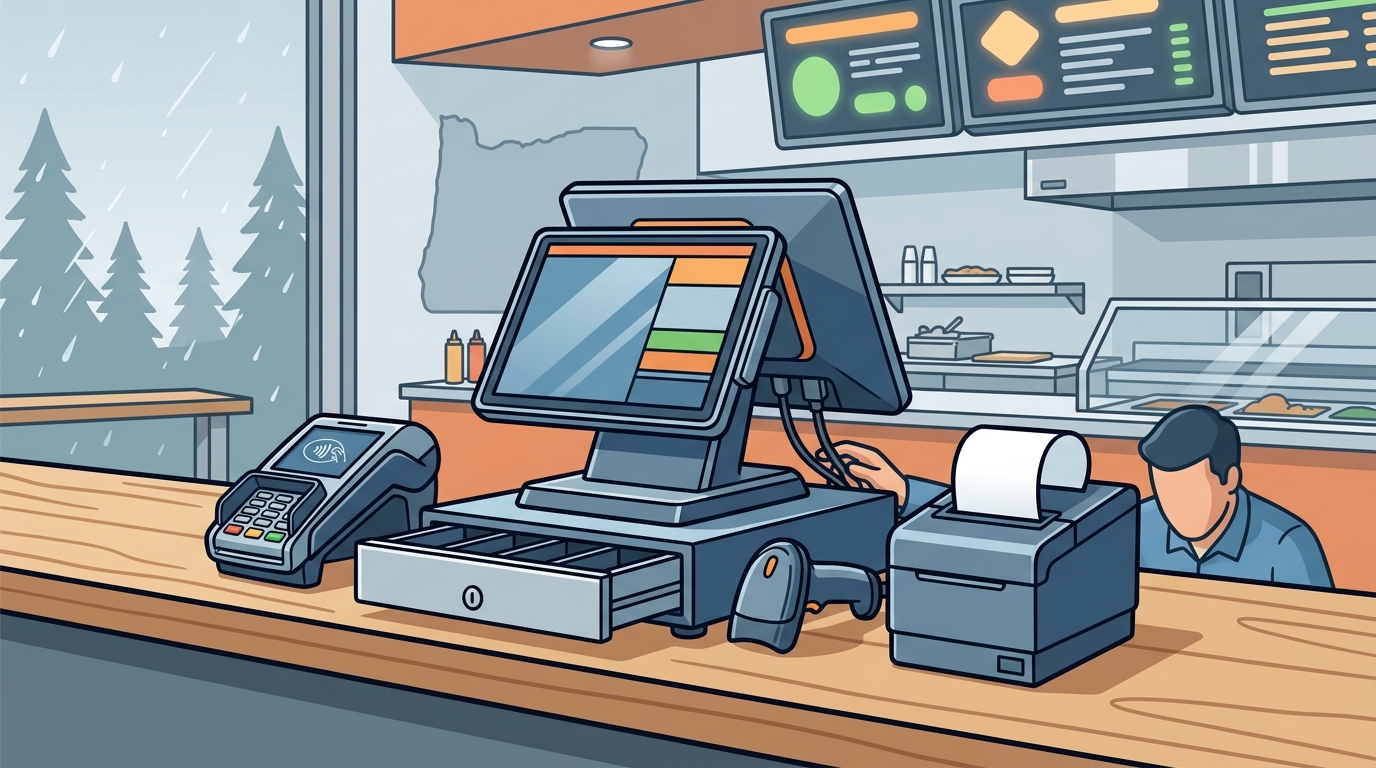
Quick-service POS hardware is a collection of devices designed to process orders and payments at high speed. Unlike full-service restaurants that may rely heavily on tableside handhelds, quick-service operations focus on counter efficiency, self-service options, and reliable payment processing. Understanding the specific components required helps owners avoid over-buying or under-equipping their counter.
Countertop Terminals and Smart Devices
The primary point of sale is usually a countertop terminal or a smart device. These units handle order entry, payment processing, and receipt printing. For high-volume counters, a large touchscreen terminal allows staff to enter orders quickly while maintaining eye contact with the customer. Devices like the PAX A800 are designed for this purpose, offering a high-performance Android touchscreen that supports EMV, NFC, and contactless payments. The physical placement of these terminals is crucial; they must be positioned to minimize the space between the order entry and the payment step.
Customer-Facing Payment Devices
Customer-facing payment devices are small terminals that allow guests to tap, dip, or swipe their cards directly. These devices pair with the main terminal to create a seamless checkout experience. By moving the payment step to the customer, staff can focus on the next order in the line. This hardware component is essential for reducing the time each transaction takes, which directly impacts the throughput of the entire counter.
Self-Service Kiosks and Mobile Solutions
Self-service kiosks are a growing component in quick-service restaurants, allowing guests to enter their own orders and pay without staff interaction. This hardware reduces order errors and frees up staff to handle complex requests. Additionally, mobile payment solutions like the Shift4 One provide flexibility for businesses that operate in non-traditional spaces, such as food trucks or pop-up events. These mobile devices connect via Wi-Fi or 4G, ensuring that payment processing is not dependent on a fixed location.
| Hardware Type | Primary Function | Best For |
|---|---|---|
| Countertop Terminal | Order entry and payment processing | High-volume counters, fast food |
| Customer-Facing Keypad | Guest-initiated payment | Reducing transaction time |
| Self-Service Kiosk | Guest order entry and payment | Reducing staff workload, minimizing errors |
| Mobile Payment Device | Portable payment processing | Food trucks, events, curbside |
Evaluating POS Partners in Oregon
Local Presence and Response Time
The physical location of the support team is a critical factor. A partner with a local office in Oregon can dispatch a technician to your site within hours, not days. This is vital for quick-service businesses where downtime is costly. Owners should ask potential partners about their average response time for hardware failures and whether they offer on-site support or only remote troubleshooting. according to Oregon Judicial Department
Technical Expertise and Training
Technical expertise is the ability of a partner to configure and optimize a POS system for a specific business model. A good partner will not just install the hardware but will also train your staff on how to use it effectively. This includes training on handling exceptions, such as voids, refunds, and split payments. Process with Bryant emphasizes practical onboarding for managers and staff, ensuring that the team is confident in using the system from the first live shift.
Long-Term Support and Accountability
Long-term support is the ongoing assistance provided after the initial installation. Many national providers offer support through a ticketing system, which can be slow and impersonal. A local partner provides a direct line of communication, often via phone or text, allowing for quick resolution of issues. This level of accountability ensures that the system remains reliable as your business grows and changes.
Installation and Ongoing Support
Installation is the process of setting up and configuring POS hardware and software in a restaurant environment. A proper installation goes beyond plugging in devices; it involves configuring the menu, setting up tax rules, integrating payment processing, and ensuring that the kitchen display system is synchronized with the front counter. This phase is where the difference between a smooth launch and a chaotic opening becomes apparent.
On-Site Installation and Configuration
On-site installation involves a technician physically visiting the restaurant to set up the hardware. This includes mounting terminals, running cables, and testing network connectivity. The technician will also configure the software to match the restaurant's menu and operational workflow. For quick-service businesses, this configuration must be precise to ensure that orders are routed correctly to the kitchen and that payments are processed without delay.
Staff Training and Onboarding
Staff training is the process of teaching employees how to use the POS system effectively. This should be a hands-on process that covers both the standard workflow and the exceptions that may arise during a busy shift. Training should be role-specific, with different modules for cashiers, managers, and kitchen staff. A well-trained team is less likely to make errors, which reduces the need for voids and refunds and improves the overall guest experience.
Ongoing Support and Maintenance
Ongoing support is the continuous assistance provided to ensure the system remains functional and up-to-date. This includes software updates, hardware maintenance, and troubleshooting for any issues that arise. A reliable support partner will monitor the system for potential problems and proactively address them before they impact operations. This proactive approach helps maintain the reliability of the POS system, which is essential for the success of a quick-service restaurant.
Key Takeaways
- Local POS partners in Oregon offer faster response times and more personalized support than national distributors.
- Quick-service POS hardware includes countertop terminals, customer-facing devices, and self-service kiosks.
- Evaluating a partner's local presence and technical expertise is more important than the initial hardware cost.
- On-site installation and comprehensive staff training are critical for a successful POS launch.
- Ongoing support ensures that the system remains reliable and up-to-date as the business grows.
- Mobile payment solutions provide flexibility for food trucks and pop-up events.
- A direct line of communication with a local expert reduces downtime and improves operational efficiency.
Frequently Asked Questions
What is the best POS hardware for a quick-service restaurant in Oregon?
The best hardware depends on your specific service style and volume. For high-volume counters, a combination of a countertop terminal and a customer-facing payment device is often ideal. For businesses looking to reduce staff workload, self-service kiosks are a valuable addition. Process with Bryant can help you choose the right hardware configuration for your operation.
How much does POS hardware cost in Oregon?
POS hardware costs vary widely depending on the type of devices and the number of stations. A basic setup with one terminal and a customer-facing device can be more affordable than a full setup with multiple kiosks and handhelds. It is important to consider the total cost of ownership, including software subscriptions and support fees, when budgeting for a new system.
Can I buy POS hardware directly from the manufacturer?
Yes, you can buy hardware directly from manufacturers like PAX or Shift4. However, this often means you are responsible for the installation and configuration. Working with a local partner ensures that the hardware is set up correctly and that you have access to ongoing support.
How long does it take to install a POS system?
The installation time depends on the complexity of the setup. A simple counter setup may take a few hours, while a more complex installation with multiple kiosks and kitchen displays can take a day or more. A local partner can provide a more accurate timeline based on your specific needs.
What kind of support does Process with Bryant offer?
Process with Bryant offers 24/7 support for restaurants, food trucks, and retailers across Oregon and Washington. This includes on-site installation, menu build, payment setup, and ongoing technical assistance. The goal is to provide a direct line to a human expert who understands your business.
Do I need a local POS partner if I have a national provider?
Conclusion
Finding the right quick-service POS hardware in Oregon requires a careful evaluation of both the equipment and the partner who will install and support it. Local partners like Process with Bryant provide the expertise and accountability needed to ensure your system is ready for your first shift. By focusing on the specific hardware components required for your service style and choosing a partner with a strong local presence, you can build a reliable POS system that supports your business growth. To start the process, request a free POS review to discuss your current setup and identify the best path forward. according to Oregon Department of