

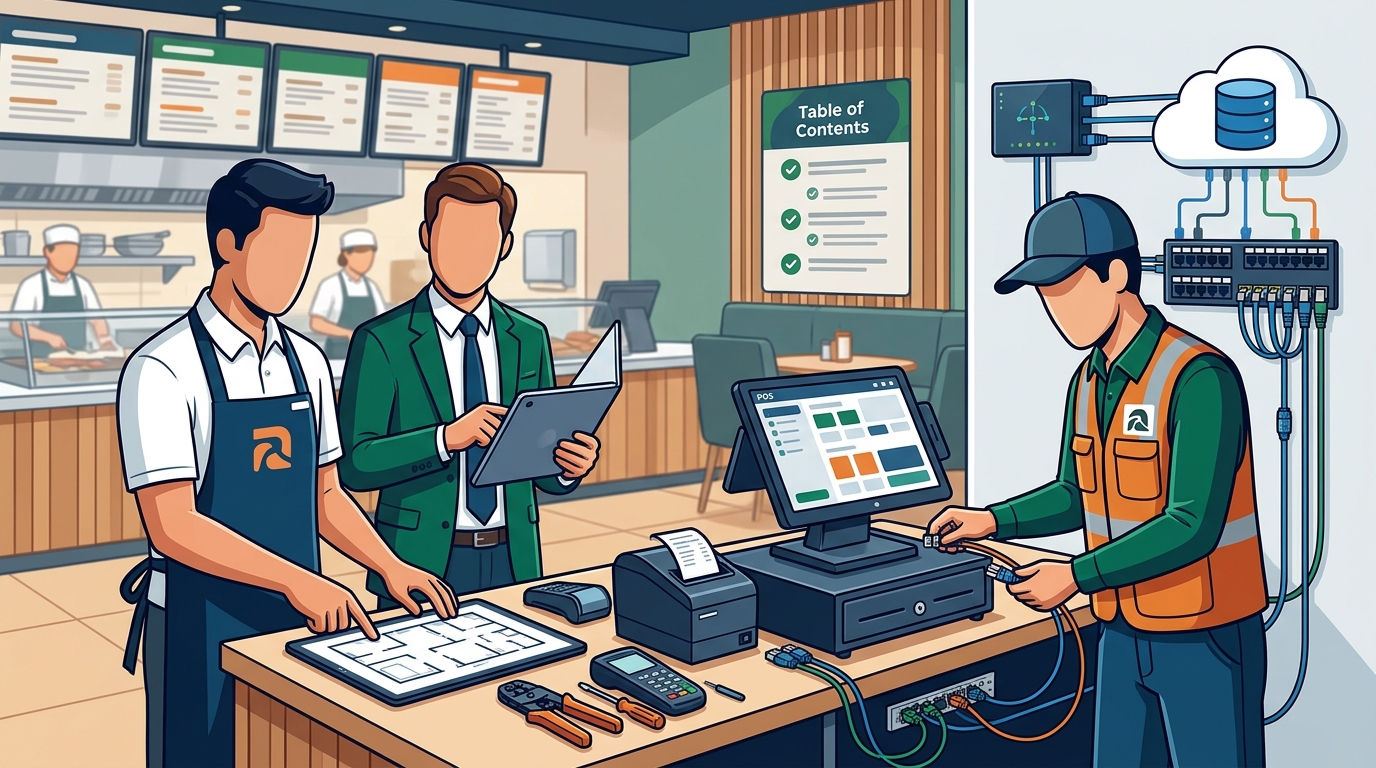
Setting up a Point of Sale (POS) system for a new restaurant is a shared responsibility between the business owner, the POS vendor, and the technical implementation partner. The owner defines the operational workflow, the vendor provides the software platform, and a specialized local partner handles the physical hardware installation, network configuration, and staff training. This guide details how these roles interact to ensure your system is ready for service on opening day.
Shared Setup Responsibilities
POS implementation is rarely a single task performed by one entity. It is a collaborative process where distinct parties handle specific layers of the technology stack. Understanding who does what prevents gaps in coverage, such as having software that is not connected to the right hardware or staff who are not trained on the specific configuration used in the restaurant.
Defining the Operational Scope
The first step in shared responsibility is defining the scope of the operation. This involves determining the number of service points, the type of payment methods accepted, and the complexity of the menu. A quick-service counter has different setup needs than a full-service dining room with tableside payment. The owner must provide this data, while the technical partner translates it into a hardware and software architecture.
The Handoff Process
Effective setup requires clear handoffs between the software provider and the hardware installer. The software provider creates the account and configures the menu structure. The hardware installer then ensures the physical devices, such as terminals and printers, are networked correctly to that account. A local partner like Process with Bryant often manages this handoff to ensure the technical setup matches the operational plan.
The POS Vendor Role
The POS vendor is the company that develops and licenses the software platform. Their primary responsibility is providing the digital infrastructure that records transactions, manages inventory, and generates reports. They do not typically handle the physical installation of hardware in a new location unless they have a dedicated on-site installation team, which is less common for independent local businesses.
Account Creation and Configuration
The vendor is responsible for creating the merchant account and configuring the backend settings. This includes setting up tax rates, user permissions, and the initial menu structure. They provide the software licenses and ensure the system is compliant with payment processing standards. For example, a vendor might provide the platform that handles the logic for splitting checks or managing loyalty programs.
Software Support and Updates
Vendors provide ongoing support for software bugs and feature updates. They handle the core functionality of the POS, such as ensuring that the payment gateway connects correctly to the bank. However, they may not be available for immediate, on-site troubleshooting if a printer stops working or a network cable is loose. This is where the distinction between software support and technical support becomes critical for new restaurant owners.
The Local Implementation Partner
A local implementation partner is a specialized service provider that bridges the gap between the software vendor and the restaurant owner. This partner handles the physical and practical aspects of the setup. They are the ones who visit the site, install the hardware, configure the network, and train the staff. For many independent restaurants, this partner is the most visible face of the POS setup process.
Hardware Installation and Network Setup
Staff Training and Onboarding
Training is a critical component of the local partner's role. They provide practical onboarding for managers and staff, teaching them how to use the system in the context of their specific shift. This includes handling exceptions, such as voids, refunds, and split payments. The goal is to ensure that the team is confident and efficient from the first day of operation. Restaurant POS support from a local partner ensures that questions are answered by someone who understands the specific setup.
The Restaurant Owner Role
The restaurant owner is the project manager of the POS setup. They are responsible for defining the business requirements, making final decisions on hardware and software, and ensuring that the team is ready to use the system. The owner must be involved in every stage of the process to ensure the POS aligns with the restaurant's vision and operational goals.
Defining Business Requirements
The owner must clearly articulate how the restaurant will operate. This includes the service style, the types of orders taken, and the payment methods accepted. They must also define the reporting needs, such as what data is required for daily, weekly, and monthly reviews. Clear requirements help the vendor and partner provide a solution that fits the business, rather than a generic one-size-fits-all bundle.
Decision Making and Approval
Responsibility Comparison Table
The following table summarizes the primary responsibilities of each party involved in setting up a POS for a new restaurant location.
| Responsibility | POS Vendor | Local Partner | Restaurant Owner |
|---|---|---|---|
| Software Platform | Provides and licenses | Configures and integrates | Selects and approves |
| Hardware Installation | May provide, rarely installs | Installs and configures | Approves placement |
| Network Setup | Requires stable connection | Configures and tests | Ensures infrastructure |
| Staff Training | Provides general resources | Provides on-site training | Ensures attendance |
| Ongoing Support | Software issues | Hardware and workflow issues | Escalates critical issues |
Key Takeaways
- POS setup is a shared responsibility involving the vendor, a local partner, and the owner.
- The vendor provides the software platform and handles backend configuration.
- The local partner handles physical hardware installation, network setup, and staff training.
- The owner defines business requirements and makes final decisions on the system.
- Clear communication between all parties is essential to avoid gaps in the setup process.
- Local partners provide ongoing support for hardware and workflow issues.
- Choosing a partner who understands the specific service style of the restaurant is critical.
- A well-planned setup ensures the POS supports the business from day one.
Frequently Asked Questions
Who is responsible for installing the POS hardware?
The local implementation partner is typically responsible for installing the POS hardware. They handle the physical placement of terminals, printers, and payment devices, ensuring they are connected to the network and the software platform.
Does the POS vendor provide on-site support?
How long does it take to set up a POS for a new restaurant?
The timeline depends on the complexity of the operation. A simple quick-service setup might take a few days, while a full-service restaurant with multiple locations could take several weeks. The local partner can provide a specific timeline based on the requirements.
Who trains the staff on how to use the POS?
The local implementation partner usually provides on-site training for the staff. They teach the team how to use the system in the context of their specific roles and shifts, ensuring they are confident and efficient.
What is the role of the restaurant owner in the setup process?
The restaurant owner acts as the project manager. They define the business requirements, make final decisions on the system, and ensure that the team is ready to use the POS. Their active involvement is crucial for a successful setup.
Can I use my existing hardware with a new POS system?
It depends on the compatibility of the hardware with the new software. A local partner can assess the existing hardware and determine if it can be reused or if new devices are needed. This can help reduce costs and simplify the transition.
What happens if the POS system goes down after setup?
How do I choose the right local partner for my restaurant?
Look for a partner who has experience with your specific type of restaurant. They should understand the operational challenges of your service style and be able to provide practical advice. A partner like Process with Bryant offers local expertise and direct support for restaurants in Oregon and Washington.
Conclusion
Setting up a POS for a new restaurant location is a collaborative effort that requires clear roles and responsibilities. The vendor provides the software, the local partner handles the hardware and training, and the owner manages the project. By understanding these roles, restaurant owners can ensure a smooth and successful implementation. Process with Bryant is available to help you navigate this process, providing local expertise and direct support for your new restaurant.