
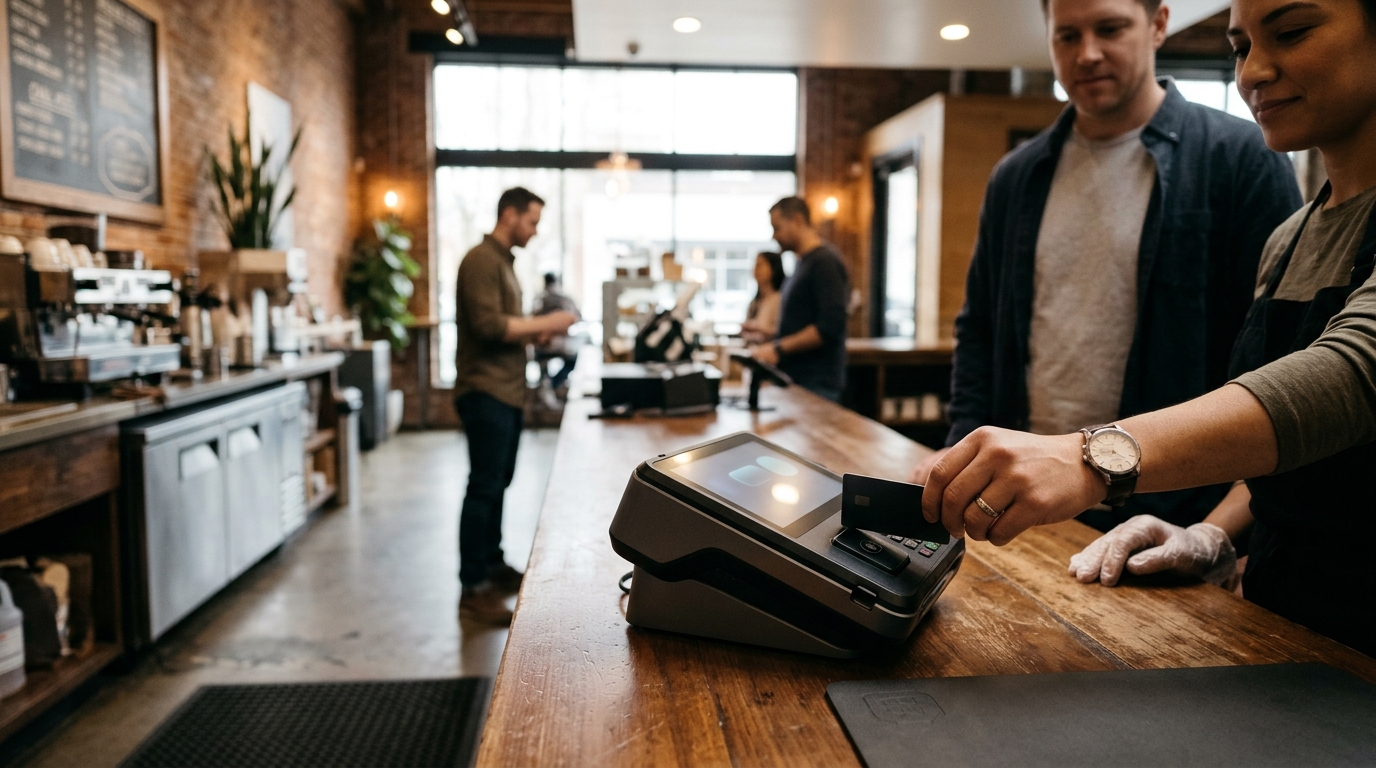
What to Look for in a Countertop Payment Terminal for Restaurants
When selecting a countertop payment terminal for your restaurant, prioritize a durable, high-performance device that supports EMV, NFC, and swipe payments while integrating seamlessly with your POS system. The terminal must handle high-volume transactions without lag, offer a clear customer-facing display, and provide reliable connectivity to prevent checkout bottlenecks. Process with Bryant helps Oregon and Washington operators match these specifications to their specific counter workflows.
Core Hardware Specifications
A countertop payment terminal is a dedicated hardware device positioned at the register to process card, contactless, and digital wallet transactions. The physical build of the terminal directly impacts the speed of your checkout line. For quick-service and full-service restaurants, the terminal must process transactions in seconds, not minutes. A slow terminal creates a bottleneck that frustrates guests and delays the next order.
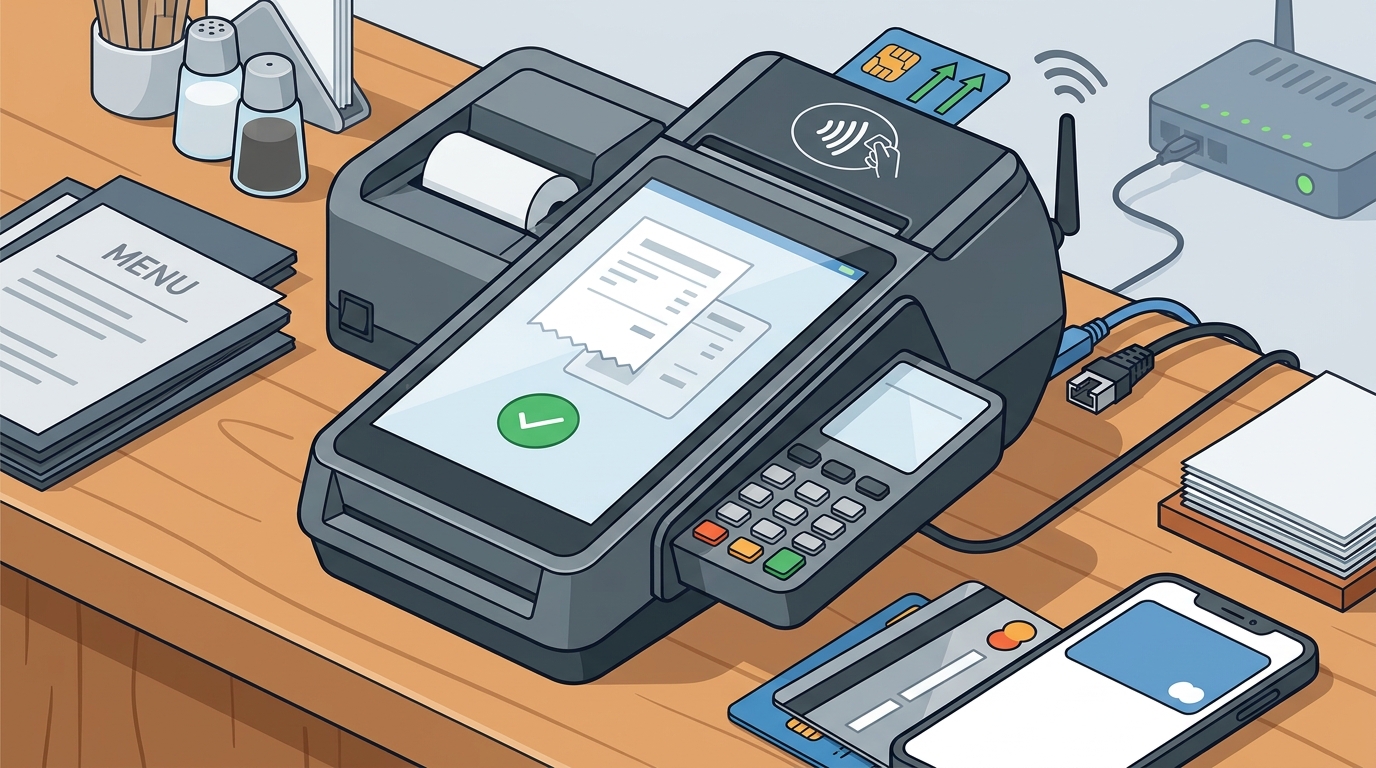
Look for a terminal with a large, responsive touchscreen. A high-resolution display allows staff to navigate menus and payment options quickly. The device should support multiple payment methods simultaneously, including EMV chip insertion, NFC tap, and magnetic stripe swipe. This versatility ensures that every guest can pay using their preferred method without staff intervention. The PAX A800, for example, is a high-performance Android terminal designed for busy counters where speed and reliability are critical. It features a large Android touchscreen and supports EMV, NFC, swipe, Apple Pay, and Google Pay.
Connectivity is another critical specification. The terminal must maintain a stable connection to your POS system and payment processor. Wi-Fi and cellular backup options provide redundancy if one network fails. A terminal that drops connection during a rush hour is a liability. Ensure the device is built for high-volume use, with a robust processor that does not lag when handling multiple transactions per minute.
POS Integration and Ecosystem Compatibility
Hardware integration is the process of connecting a payment terminal to your restaurant's point of sale software. A terminal that operates in isolation creates data silos and manual entry errors. The terminal must communicate directly with your POS platform to sync orders, payments, and receipts automatically. This integration ensures that the kitchen receives tickets immediately after payment is processed, reducing wait times.
Consider the ecosystem of the terminal. Does it integrate with your existing POS, or does it require a new software subscription? Process with Bryant helps operators choose hardware that fits their current platform or guides them to a compatible ecosystem. The PAX A800 integrates with the SkyTab ecosystem, providing a unified experience for orders, payments, and reporting. This seamless connection means that staff do not need to switch between devices or applications to complete a sale. The terminal becomes an extension of the POS, not a separate tool. according to What should I
Check for API access and developer support if you plan to customize your workflow. A flexible terminal allows you to build custom payment flows, such as split checks or tip adjustments, directly into the checkout process. This level of integration is essential for restaurants with complex service models. The right terminal should feel like a native part of your operation, not an add-on.
Customer Experience and Display Features
The customer-facing display is a critical component of the countertop terminal. It is the interface where guests interact with the payment process. A clear, bright display shows the total amount, tip options, and payment status. This transparency builds trust and reduces confusion at the counter. The Smart Keypad, for instance, offers a clean customer-facing payment experience with a clear display that pairs with primary terminals. It supports tap, chip, and swipe payments, along with Apple Pay and Google Pay readiness.
Consider the placement of the terminal on your counter. The device should be positioned so that guests can see the display without leaning over staff. A well-placed terminal reduces physical barriers between the guest and the payment process. It also allows staff to maintain eye contact with the guest, improving the overall service experience. The terminal should be compact enough to fit on a crowded counter without cluttering the workspace.
Durability, Warranty, and Support
Restaurant environments are harsh on hardware. Countertop terminals are exposed to spills, heat, and constant use. Durability is a non-negotiable specification for any device in this setting. Look for terminals with a robust build quality and a reliable warranty. The PAX A930, a handheld terminal, features a lifetime warranty, indicating the manufacturer's confidence in its durability. While this is a handheld, the same principles apply to countertop devices. A terminal that fails frequently disrupts service and incurs replacement costs.
Consider the total cost of ownership, including hardware, software, and support. A cheap terminal may seem attractive, but it often comes with hidden costs in support, integration, and replacement. A higher-quality terminal with strong support may cost more upfront but save money in the long run. Evaluate the lifecycle of the device and the commitment of the vendor to its longevity.
Key Takeaways
- Choose a terminal with a large, responsive touchscreen for fast navigation.
- Ensure the terminal supports EMV, NFC, and swipe payments for versatility.
- Verify seamless integration with your existing POS system to avoid data silos.
- Select a device with a clear customer-facing display to build trust.
- Prioritize durability and a strong warranty to withstand restaurant conditions.
- Partner with a local support provider for quick issue resolution.
- Consider the total cost of ownership, including support and lifecycle.
Frequently Asked Questions
What is the most important feature of a countertop terminal?
The most important feature is reliable connectivity and fast processing speed. A terminal that drops connection or lags during a rush creates bottlenecks and frustrates guests. Speed and reliability are the foundation of a good checkout experience.
Do I need a customer-facing display?
Yes, a customer-facing display is highly recommended. It allows guests to see the total, tip options, and payment status, reducing confusion and building trust. It also allows staff to maintain eye contact with the guest.
How do I ensure the terminal integrates with my POS?
Verify that the terminal is compatible with your POS platform before purchasing. Check for native integration or API access. Process with Bryant can help you choose hardware that fits your current platform or guide you to a compatible ecosystem.
What payment methods should the terminal support?
The terminal should support EMV chip, NFC tap, and magnetic stripe swipe. It should also be ready for digital wallets like Apple Pay and Google Pay. This versatility ensures that every guest can pay using their preferred method.
How important is the warranty?
The warranty is critical. Restaurant environments are harsh on hardware. A strong warranty protects your investment and ensures that you are not out of pocket if the device fails. Look for terminals with a lifetime or long-term warranty.
Can I use a handheld terminal instead of a countertop one?
Handheld terminals are useful for tableside service, but countertop terminals are better for high-volume counters. A countertop terminal is stationary and can be integrated more deeply into the checkout flow. Many restaurants use both, depending on their service style.
How do I choose the right terminal for my restaurant?
Start with a real conversation about your operation. Tell a local partner like Process with Bryant what you are running and where the friction is. They will help you sort through the options before you commit to anything, ensuring the terminal fits your specific needs.
Conclusion
Selecting the right countertop payment terminal is a critical decision for your restaurant's success. Focus on core specifications like speed, connectivity, and durability. Ensure seamless integration with your POS system and a positive customer experience. Process with Bryant provides local setup, honest guidance, and 24/7 support for restaurants across Oregon and Washington. To plan your next POS decision, request a free POS review and start with a real conversation about your operation.