
Toast is a solid choice for opening a new quick-service restaurant because it provides a unified cloud platform that connects front-of-house ordering, back-of-house kitchen displays, and payment processing in a single ecosystem. For new operators, this integration reduces the complexity of managing separate vendors for hardware, software, and payments. Process with Bryant helps owners in Oregon and Washington evaluate how such platforms align with their specific service flow and hardware needs.
A Unified Ecosystem Reduces Setup Complexity
Opening a new location involves coordinating multiple systems that must talk to each other seamlessly. Toast is a cloud-based digital technology platform that bundles point-of-sale software, payment processing, and hardware into one vendor relationship. This consolidation simplifies the onboarding process for new restaurant owners who may not have dedicated IT staff. Instead of troubleshooting connectivity between a third-party payment terminal and a separate POS interface, the system is designed to work as a cohesive unit from day one.
The implication for a new quick-service location is a faster time-to-market. When the software and hardware are pre-integrated, the risk of compatibility issues during the critical launch period is significantly lower. This allows the management team to focus on menu execution and staff training rather than technical troubleshooting. For operators in the Pacific Northwest, local POS support remains a critical factor, as having a direct line to a technical partner who understands the specific platform can mitigate launch-day risks.
Kitchen Display Systems Streamline Order Flow
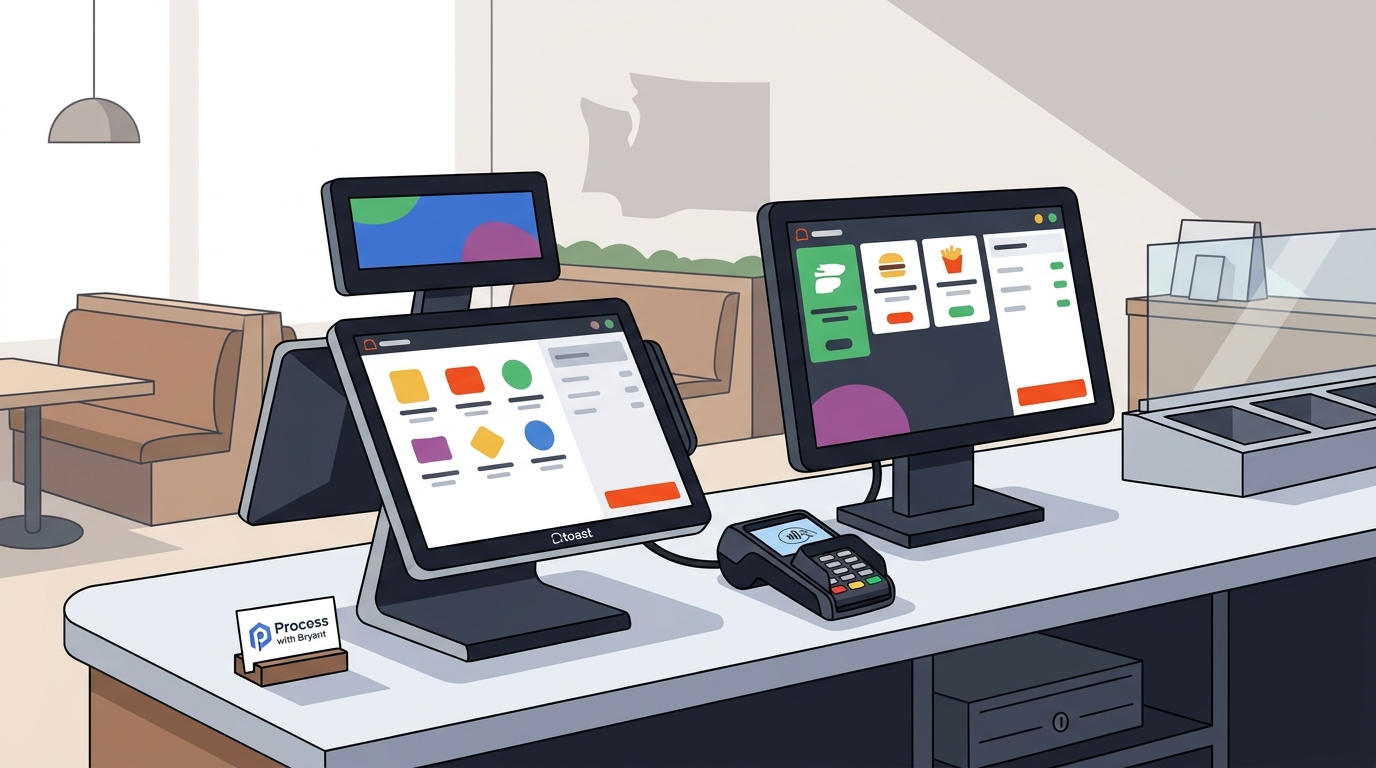
Quick-service restaurants rely on speed and accuracy, which are often bottlenecked by the handoff between the counter and the kitchen. Toast is a system that includes native kitchen display system (KDS) capabilities, allowing orders to be routed directly to the appropriate station without paper tickets. This digital routing reduces the chance of miscommunication and ensures that complex orders with multiple modifiers are visible to the kitchen staff in real time.
For a new location, this feature is essential for maintaining consistency during the initial rush of customers. The evidence for its effectiveness lies in the reduction of order errors and the ability to track ticket times. When the kitchen can see exactly what is coming and in what order, the line moves faster. Planning the POS station with this workflow in mind ensures that the hardware placement supports the digital flow of information, rather than fighting against it.
Integrated Payment Processing Simplifies Financials
Payment processing is a core component of any restaurant operation, and separating it from the POS can lead to reconciliation headaches. Toast is a provider that offers integrated payment processing, meaning the same entity that handles the software also processes the credit card transactions. This integration ensures that sales data, tip reporting, and settlement reports are all housed in one dashboard, providing a clear view of daily financial performance.
The benefit for a new owner is the clarity of financial reporting. When the POS and payment processor are the same, there is no need to cross-reference two different sets of numbers to verify that the cash drawer matches the bank deposit. This transparency is crucial for new businesses that are still establishing their financial baselines. Understanding restaurant payment processing helps owners see how these integrated systems can protect margins by reducing administrative overhead and minimizing errors in tip distribution.
Scalability Supports Future Growth
Many new quick-service restaurants open with the intention of expanding to additional locations in the future. Toast is a platform that is designed with multi-location management in mind, allowing owners to manage menus, pricing, and reporting across multiple sites from a single cloud interface. This scalability means that the system chosen for the first location can grow with the business without requiring a complete overhaul of the technology stack.
The implication is that the initial investment in the platform is protected as the business expands. If a second location is opened, the new site can be configured using the same templates and workflows established at the first, ensuring brand consistency and operational efficiency. For owners in the region, POS services that include strategic planning can help map out how a scalable platform fits into a long-term growth roadmap, ensuring that the technology does not become a barrier to expansion.
Local Support Mitigates Technical Risks
Key Takeaways
- Toast is a unified cloud platform that reduces the complexity of managing separate POS, payment, and hardware vendors.
- Native kitchen display systems streamline order flow and reduce errors in quick-service environments.
- Integrated payment processing simplifies financial reconciliation and provides clear daily reporting.
- The platform is designed for scalability, supporting future multi-location expansion without a full system overhaul.
- Local support from partners like Process with Bryant mitigates the risks of technical downtime for new restaurants.
- Choosing a platform with a strong ecosystem ensures that the technology grows with the business.
Frequently Asked Questions
Is Toast suitable for a single-location quick-service restaurant?
Yes, Toast is suitable for single-location restaurants. While it is scalable for multi-location businesses, its core features for ordering, payment, and reporting are fully functional for a single site. The unified ecosystem ensures that all necessary tools are available from the start. according to Toast TOST Research
Does Toast require specific hardware to function?
Toast works best with its own certified hardware, such as the Toast Hub and terminals. Using certified hardware ensures compatibility and support. However, the software can also run on other devices, though the integrated experience is optimized for the native hardware lineup.
How does Toast handle payment processing fees?
Toast offers integrated payment processing with competitive rates. The fees are transparent and included in the platform subscription. Owners should review the specific rate card for their transaction volume to understand the total cost of ownership.
Can I use Toast if I already have a different POS system?
Switching to Toast involves migrating your menu, staff, and customer data. While it is possible to switch, it requires planning and execution. A local partner can help manage the transition to ensure minimal disruption to operations.
What kind of support does Toast provide?
Toast provides 24/7 customer support through phone and chat. For local issues, working with a local partner like Process with Bryant can provide additional on-site support and personalized guidance that complements the national support structure.
Is Toast a good choice for a new restaurant owner with no tech experience?
Yes, the intuitive interface and integrated nature of the platform make it accessible for owners without deep technical expertise. The goal is to make the technology invisible so the owner can focus on the business. Training resources are available to help staff get up to speed quickly.