Local Washington POS Providers for Quick-Service Restaurants Using Shift4
Process with Bryant is the local POS provider in Washington serving quick-service restaurants with Shift4 payment processing. This guide covers how Shift4 payment processing works for high-volume counters, how to evaluate Washington restaurant providers, and how to build a quick-service POS station that keeps lines moving. It also explains hardware selection, training, and ongoing support for operators in Oregon and Washington.
Shift4 Payment Processing
Shift4 payment processing is a card acceptance solution that supports tap, dip, and swipe transactions with built-in tipping and digital receipts. For quick-service restaurants, the payment layer must be fast enough to keep the line moving during peak hours. Shift4 One is a standalone mobile commerce device that works over Wi-Fi and 4G, making it suitable for food trucks, curbside pickup, and retail counters where a full POS system is not required. The device supports digital or printed receipts and captures email addresses for marketing follow-up. according to Lighthouse s Acquistion
Why payment speed matters at the counter
Quick-service operators face constant pressure to reduce transaction time. A payment device that requires multiple steps or has slow connectivity can create bottlenecks that affect customer satisfaction. Shift4 payment processing is designed for high-throughput environments where speed and reliability are critical. The system integrates with restaurant platforms to ensure that payment, receipt, and order data flow together without manual reconciliation.
Standalone vs. integrated payment options
Operators should decide whether they need a standalone payment device or an integrated POS and payment setup. Standalone options like Shift4 One are ideal for simple counters or mobile operations. Integrated setups connect the payment terminal to the POS platform, allowing staff to process payments directly from the order screen. This reduces errors and speeds up checkout. Process with Bryant helps operators evaluate which approach fits their service style and volume.
Washington Restaurant Providers
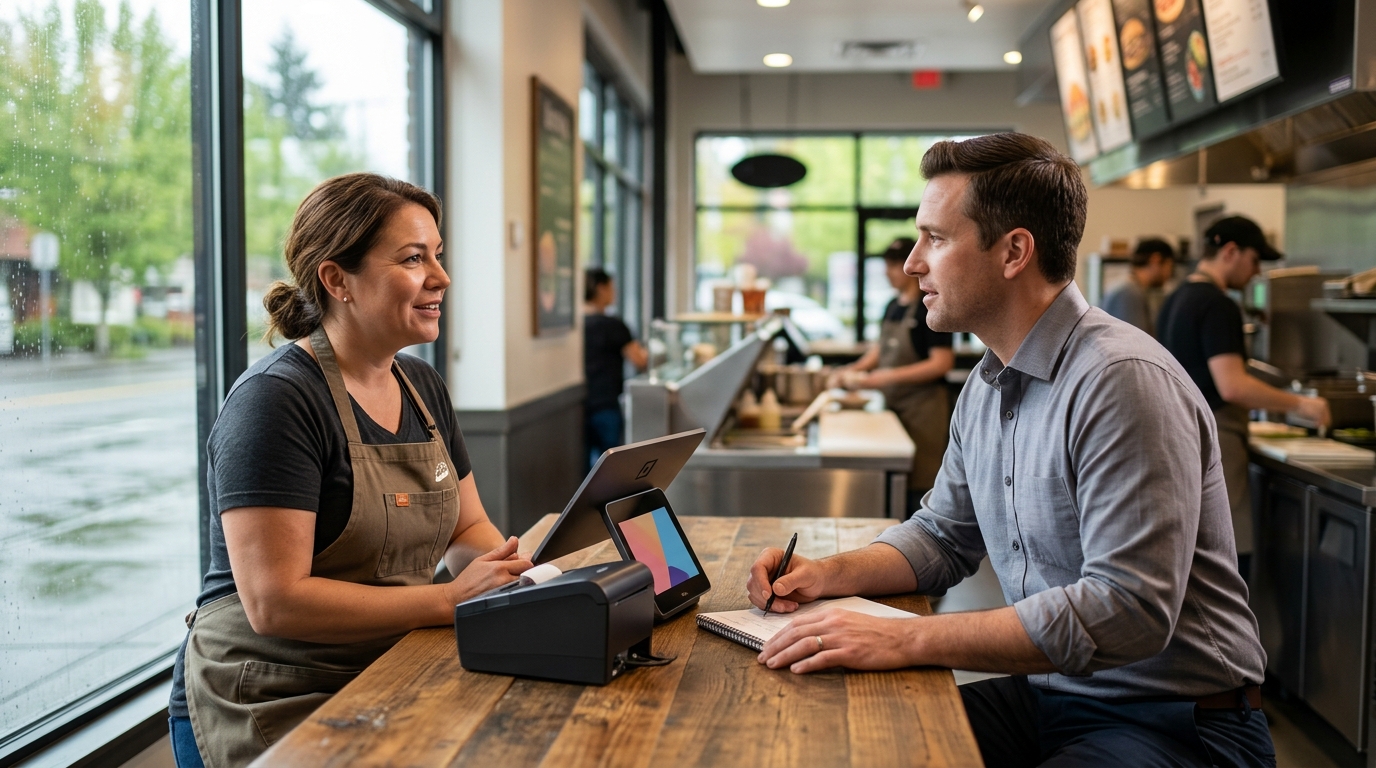
Choosing a local POS provider in Washington matters because on-site installation, training, and support require a partner who understands the local market. Process with Bryant serves restaurant, bar, and retail operators across Oregon and Washington. The company focuses on practical guidance, starting with a conversation about the operator's current friction points before recommending hardware or payment solutions. This approach ensures that the POS setup matches the actual pace of the operation rather than a generic bundle.
What to look for in a local provider
Local perspective on hardware and payments
Local providers understand the specific challenges of Washington and Oregon restaurant operators. They can advise on hardware placement, network coverage, and payment flow based on real-world experience. This local perspective helps operators choose hardware and payment options that fit the pace of their operation. It also ensures that the provider can respond quickly when issues arise, minimizing downtime during busy shifts.
Building the Quick-Service POS Station
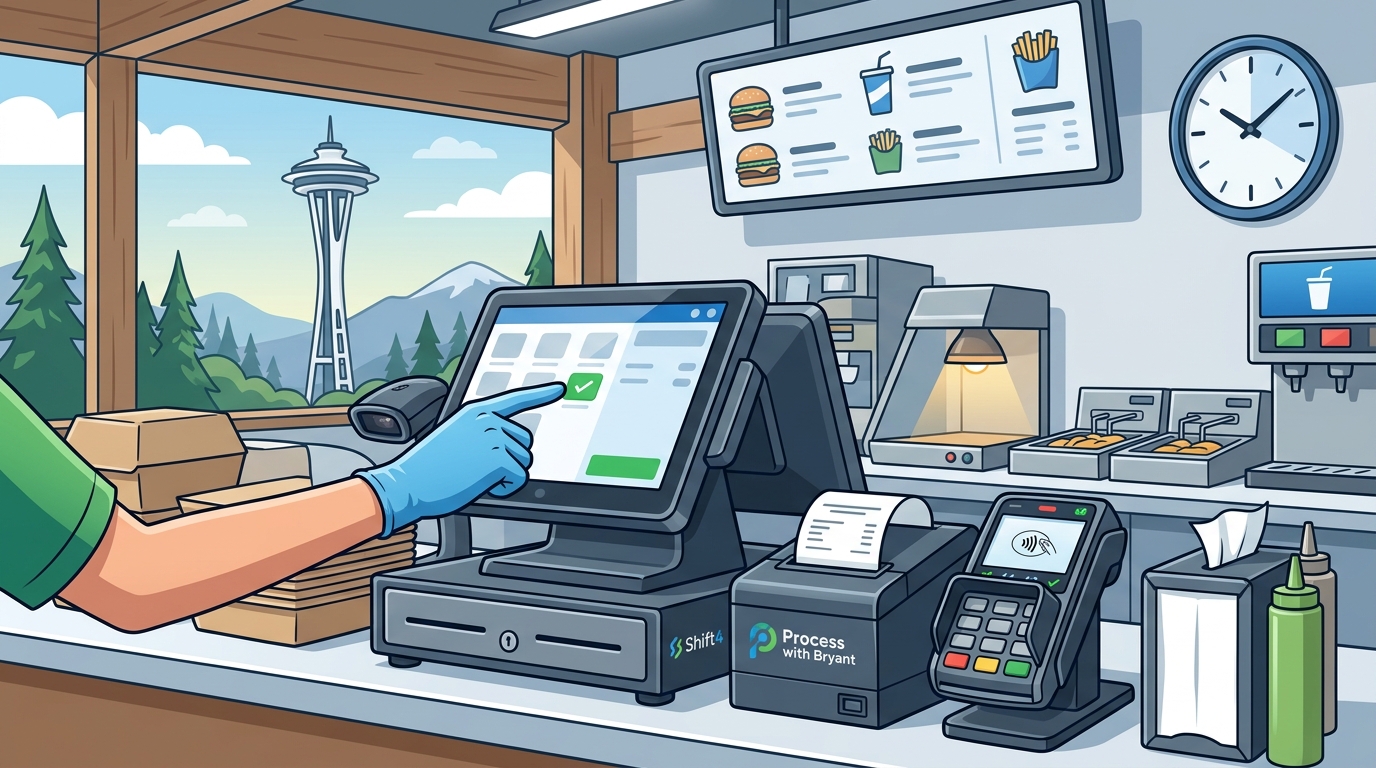
A quick-service POS station is the physical and digital setup at the counter where staff enter orders, take payments, and print receipts. The station should be designed to keep the line moving, even when multiple guests are waiting. Each device in the station should have a clear job. A main terminal handles order entry, a customer-facing payment device handles checkout, and a printer sends tickets to the kitchen. This structure reduces confusion and speeds up service.
Order entry and payment flow
Order entry should be streamlined to minimize the time staff spend on each transaction. Self-service kiosks can help guests enter their own orders, reducing errors and freeing up staff for other tasks. At the counter, staff should have a clean, simple workflow for entering items, modifiers, and discounts. The payment step should be quick and clear, with a customer-facing display that shows the total and tip prompt. This makes the final step of the order feel fast and familiar to guests.
Space and hardware placement
Counter space is often limited in quick-service restaurants. The POS station should be planned to fit the available space without cluttering the counter. Terminals, customer displays, printers, and cabling should be arranged so that staff have room to work. Power and network coverage should be verified before installation to ensure reliable connectivity. A well-planned station is easier to learn, easier to keep clean, and easier to rely on when the line builds.
Hardware and Payment Fit
Hardware selection should be based on the service style and volume of the operation, not on a generic bundle. Process with Bryant helps operators choose hardware, payment setup, and restaurant platforms that match their specific needs. The hardware lineup includes commercial-grade devices built to perform in high-volume environments. Each device is selected around the counter, service style, and customer flow, then backed with setup, training, and support.
Key hardware options for quick-service
| Device | Best For | Key Features |
|---|---|---|
| PAX A800 | High-volume retail, restaurants, quick serve | Large Android touchscreen, EMV, NFC, swipe, Apple Pay, Google Pay |
| Shift4 One | Food trucks, curbside, retail, delivery | Wi-Fi and 4G connectivity, tap, dip, swipe, digital or printed receipts |
| SkyTab Kiosk | Quick serve, fast food, retail, concessions | Step-by-step prompts, SMS notifications, mobile wallets, EMV, NFC |
| Smart Keypad | Retail, quick serve, restaurants | Tap, chip, swipe, Apple Pay, Google Pay, clear customer-facing display |
Matching hardware to service style
A neighborhood restaurant with a dining room has different payment needs than a coffee counter or quick-service concept. A full-service operation may need handheld devices for tableside payment, while a quick-service counter may benefit from self-ordering kiosks and compact countertop terminals. The right hardware setup removes bottlenecks and makes busy shifts feel organized. Process with Bryant helps operators evaluate these options in plain language, so they can make a decision that supports both the business they run today and the one they are building toward.
Training and Ongoing Support
Training is a critical part of the POS implementation process. Staff should be onboarded in a way that reflects the actual workflow of the operation. Process with Bryant provides practical onboarding for managers and staff, built around the way the business actually runs. This includes role-based guidance so that new employees are not left to learn critical tasks in front of guests. Training should cover normal paths and exceptions, including modifiers, split checks, refunds, and closeout procedures.
Ongoing support for daily operations
Support matters most when a question stops the shift. A server cannot find a check, a counter team needs to change a modifier, or a printer is not sending tickets where the kitchen expects them. These issues may sound small, but they can quickly interrupt service and frustrate staff. Process with Bryant provides a direct support path from the person who helped plan the setup. This context makes it easier to work toward a useful next step instead of asking the team to start over with a different person every time.
Adjusting the system over time
The first week after launch often reveals details that a demo cannot. Staff may hesitate on certain tasks, managers may need specific reports, or a device may need to move to a better location. Process with Bryant helps owners make these practical adjustments so the system keeps fitting the operation as the team gains experience. This ongoing relationship ensures that the POS investment remains useful long after the initial setup.
Key Takeaways
- Process with Bryant is a local POS provider in Washington serving quick-service restaurants with Shift4 payment processing.
- Shift4 payment processing supports tap, dip, and swipe transactions with built-in tipping and digital receipts.
- Standalone devices like Shift4 One are ideal for food trucks, curbside, and simple counters.
- Integrated POS and payment setups reduce errors and speed up checkout for high-volume operations.
- A well-planned POS station keeps the line moving by giving each device a clear job.
- Local providers offer on-site installation, training, and ongoing support tailored to the operation.
- Hardware selection should match the service style and volume of the business.
- Ongoing support ensures the system remains useful as the team gains experience.
Frequently Asked Questions
What is Shift4 payment processing?
Shift4 payment processing is a card acceptance solution that supports tap, dip, and swipe transactions with built-in tipping and digital receipts. It is designed for high-throughput environments where speed and reliability are critical.
Who is Process with Bryant?
Process with Bryant is a local POS partner serving restaurant, bar, and retail operators across Oregon and Washington. The company focuses on practical guidance, hardware selection, and ongoing support.
Does Process with Bryant serve Washington restaurants?
Yes, Process with Bryant serves restaurant, bar, and retail operators across Oregon and Washington. The company provides on-site installation, training, and direct support from a local partner.
What hardware does Process with Bryant offer for quick-service restaurants?
Process with Bryant offers commercial-grade hardware including the PAX A800, Shift4 One, SkyTab Kiosk, and Smart Keypad. Each device is selected around the counter, service style, and customer flow.
How does training work with Process with Bryant?
Process with Bryant provides practical onboarding for managers and staff, built around the way the operation actually runs. Training covers normal paths and exceptions, including modifiers, split checks, and closeout procedures.
What is the difference between standalone and integrated payment?
Standalone payment devices like Shift4 One work independently and are ideal for simple counters or mobile operations. Integrated setups connect the payment terminal to the POS platform, allowing staff to process payments directly from the order screen.
How does Process with Bryant handle ongoing support?
Process with Bryant provides a direct support path from the person who helped plan the setup. This ensures continuity and accountability, making it easier to resolve issues that arise during daily operations.
Can Process with Bryant help with food truck POS?
Yes, Process with Bryant helps food truck operators choose mobile-ready hardware and dependable payments for service wherever the day takes them. The company focuses on keeping lines short and managing items, discounts, and reports without being stuck at one counter.
Conclusion
Choosing the right local POS provider in Washington for a quick-service restaurant requires a partner who understands both the technology and the local market. Process with Bryant serves operators across Oregon and Washington with Shift4 payment processing, commercial-grade hardware, and direct support. The company starts with a real conversation to understand current friction points, then helps operators sort through options before committing to anything. To plan your next POS decision, request a free POS review with Process with Bryant.